Catwoman In The Comics Heroine Evolution
- 1.
Ever Wondered What Makes Catwoman So Purr-fectly Irresistible?
- 2.
The Birth of a Legend: Selina Kyle's First Prowl
- 3.
Golden Age Glamour: When Catwoman Was Just a Femme Fatale
- 4.
Silver Age Shenanigans: The Campy Years
- 5.
Modern Era Mastery: When Catwoman Got Her Own Voice
- 6.
The Complex Relationship: Batman and Catwoman's Love-Hate Tango
- 7.
Maternity in Gotham: The Shocking Pregnancy Arc
- 8.
Race and Representation: The Evolution of Catwoman's Identity
- 9.
Carrie Kelley: The Robin Who Almost Became Catgirl
- 10.
Exploring More Comic Book Legends and Their Stories
Table of Contents
catwoman in the comics
Ever Wondered What Makes Catwoman So Purr-fectly Irresistible?
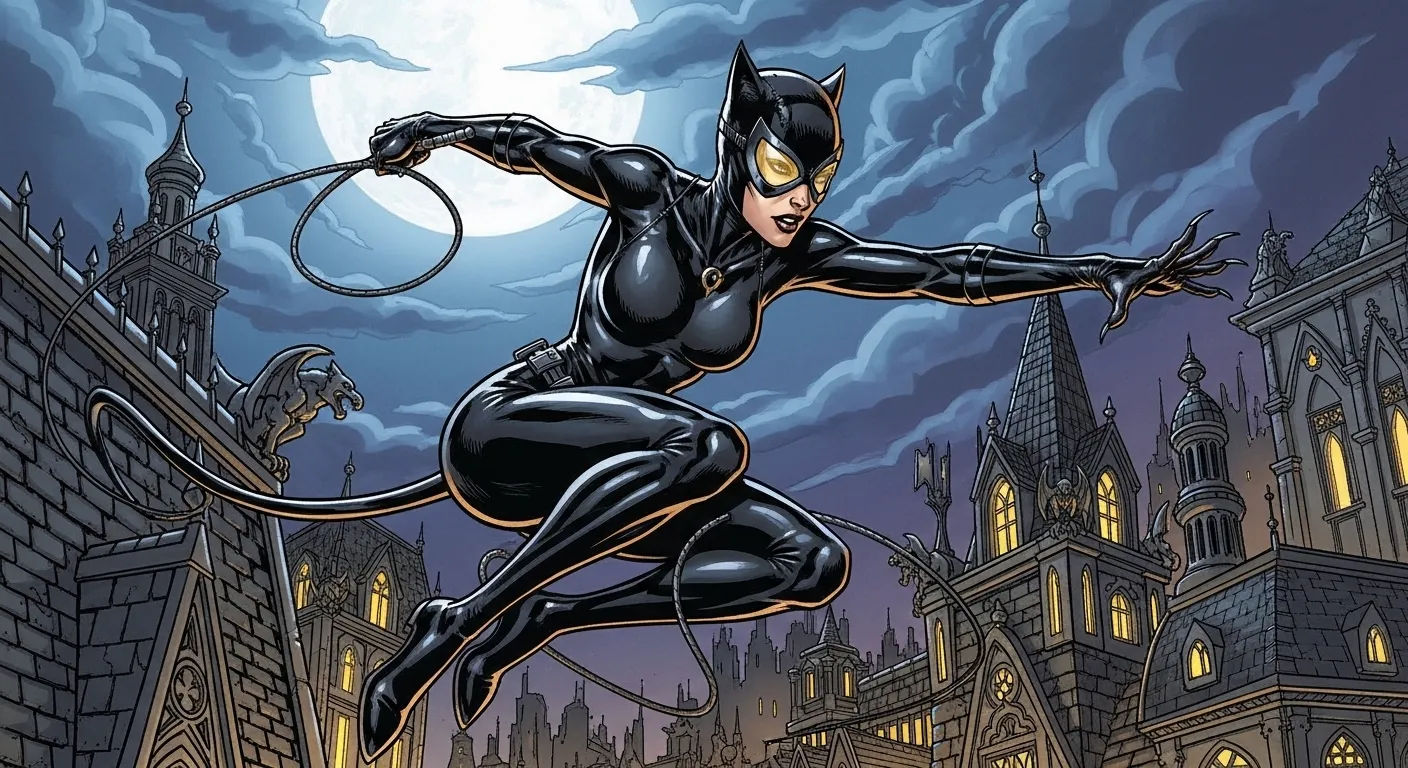
Alright, let's be real for a second—have you ever read a Batman comic and found yourself more interested in the woman in the catsuit than the guy in the cape? No shame, we've all been there! There's just something about catwoman in the comics that makes her impossible to ignore. She's not just some villain or love interest—she's a whole mood, a lifestyle, a philosophy wrapped up in leather and mystery. The catwoman in the comics we know and love today has evolved so much over the decades, but her core appeal remains the same: she's dangerous, she's smart, and she plays by her own rules. And honestly? We stan.
The Birth of a Legend: Selina Kyle's First Prowl
Let's rewind to the very beginning, shall we? The original Catwoman in the comics made her debut way back in 1940, in Batman #1, and she was an instant sensation. Created by Bill Finger and Bob Kane, Selina Kyle started as "The Cat," a mysterious burglar with a penchant for stealing jewels and breaking hearts. But here's the thing—she wasn't always called Catwoman! In those early days, she was just "The Cat," and her costume was more of a simple green dress with a cat-eared hood. The catwoman in the comics we recognize today—with the sleek black catsuit and whip—didn't fully emerge until later. But even in those early appearances, you could see the spark of something special: a woman who refused to be just another damsel or villainess.
Golden Age Glamour: When Catwoman Was Just a Femme Fatale
During the Golden Age of comics (roughly 1938-1956), catwoman in the comics was portrayed as your classic femme fatale—seductive, mysterious, and always one step ahead of Batman. She wasn't necessarily evil; she was just... complicated. She'd steal jewels one minute and save Batman's life the next. This moral ambiguity was actually pretty revolutionary for the time, when most female characters were either pure heroines or straight-up villains. The catwoman in the comics of this era was like a noir film star come to life—think Veronica Lake or Rita Hayworth, but with claws and a lot more attitude.
Silver Age Shenanigans: The Campy Years
Then came the Silver Age (1956-1970), and oh boy, things got weird. This was the era of the 1960s Batman TV show, and catwoman in the comics got a serious camp upgrade. Julie Newmar's portrayal on TV influenced the comics, making Catwoman more playful and flirtatious. But here's a fun fact: during this period, Catwoman actually disappeared from the comics for a while! DC Comics retired the character in the early 1960s, thinking she was too similar to other female villains. Thankfully, fan demand and the success of the TV show brought her back with a vengeance. The catwoman in the comics of this era was all about fun, glamour, and that signature purr that could melt even the Dark Knight's heart.
Modern Era Mastery: When Catwoman Got Her Own Voice
Fast forward to the 1980s and 1990s, and everything changed. Frank Miller's "The Dark Knight Returns" and "Batman: Year One" gave us a grittier, more complex version of catwoman in the comics. But the real game-changer was the 1993 solo series written by various authors, which finally gave Selina Kyle her own voice and backstory. This is when we learned about her difficult childhood, her time as a dominatrix, and her complicated relationship with Batman. The catwoman in the comics was no longer just Batman's love interest or adversary—she was a fully realized character with her own motivations, flaws, and strengths. It was like watching a supporting character finally get the spotlight they deserved.
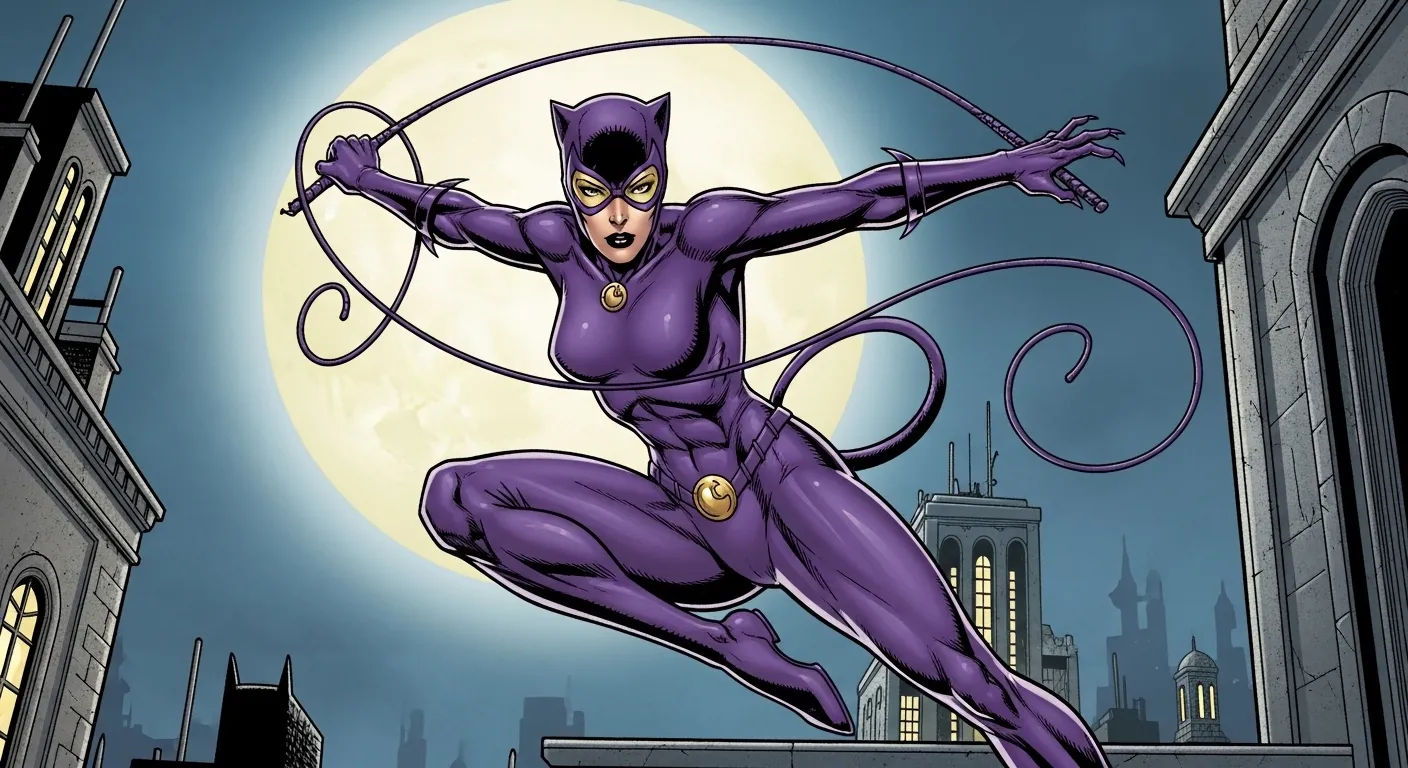
The Complex Relationship: Batman and Catwoman's Love-Hate Tango
Let's talk about the elephant in the room—or should I say, the bat and the cat in the room? The relationship between Batman and Catwoman is one of the most complicated in comic book history. They've been enemies, allies, lovers, and everything in between. There's this push-and-pull dynamic that's absolutely mesmerizing to watch unfold across decades of catwoman in the comics. One minute they're fighting on a rooftop, the next they're sharing a quiet moment in the Batcave. And let's not forget that iconic moment in "Batman #1" (2011) when Batman actually proposed to Catwoman! The catwoman in the comics relationship with Batman is like a dance where neither partner knows the steps, but they keep moving together anyway.
Maternity in Gotham: The Shocking Pregnancy Arc
Now, let's address the elephant-sized question everyone's been asking: who got Catwoman pregnant in the comics? Well, hold onto your utility belts, because this storyline is wild. In the "Batman/Catwoman" series by Tom King and Clay Mann, we learn that Selina Kyle and Bruce Wayne actually have a daughter together named Helena Wayne (who becomes the Huntress in some continuities). But here's where it gets complicated—the pregnancy and birth happen across different timelines and realities, which is pretty standard for DC Comics. The catwoman in the comics maternity storyline explores themes of legacy, family, and whether two broken people can create something beautiful together. It's messy, emotional, and absolutely fascinating to follow.
Race and Representation: The Evolution of Catwoman's Identity
Here's a question that's been making the rounds: was Catwoman originally black in the comics? The short answer is no—Selina Kyle was created as a white character in 1940. However, the catwoman in the comics has always had this mysterious, almost otherworldly quality that made her ethnicity somewhat ambiguous. Over the years, different artists have interpreted her appearance differently, and in recent years, there's been more diversity in how she's portrayed. Additionally, Eartha Kitt's iconic portrayal of Catwoman in the 1960s TV series was groundbreaking for its time, showing that the character could be played by women of color. The catwoman in the comics legacy is about more than just one woman—it's about the archetype of the powerful, independent female who can be anyone, regardless of race or background.
Carrie Kelley: The Robin Who Almost Became Catgirl
And now for the million-dollar question: is Carrie Kelley catgirl? Well, the answer is... it's complicated. Carrie Kelley is best known as the Robin from Frank Miller's "The Dark Knight Returns," where she's a young girl who becomes Batman's sidekick in an alternate future. In that story, she does briefly take on a cat-like persona, but she's not officially Catgirl. However, in other continuities and fan interpretations, Carrie has been associated with cat-like themes. The confusion probably comes from the fact that both characters are young women who operate in Gotham's underworld and have connections to Batman. But in mainstream catwoman in the comics continuity, Carrie Kelley remains Robin, not Catgirl. The real Catgirl title belongs to other characters like Selina's daughter Helena or various other women who've taken up the mantle over the years.
Exploring More Comic Book Legends and Their Stories
If you're hungry for more deep dives into the fascinating world of comic book characters like catwoman in the comics, you've come to the right place. Start your journey through the panels at Randall Enos, where we celebrate the art, history, and cultural impact of comics from every era. For more character analyses and comic book lore, explore our dedicated Comics section featuring everything from Golden Age classics to modern masterpieces. And if you're curious about another iconic Batman relationship, our exploration of Batman And Catwoman Animated Series Romance Arc will give you all the feels about everyone's favorite bat and cat duo.
Frequently Asked Questions
Who was the original Catwoman in the comics?
The original Catwoman in the comics was Selina Kyle, who first appeared as "The Cat" in Batman #1 in 1940. Created by Bill Finger and Bob Kane, she debuted as a mysterious burglar with a cat-eared hood and green dress. The catwoman in the comics character evolved over time, eventually adopting the iconic black catsuit and whip that fans recognize today. Selina Kyle remains the definitive and most enduring version of the character across all media adaptations.
Who got Catwoman pregnant in the comics?
In the comics, Batman (Bruce Wayne) is the father of Catwoman's child. The pregnancy storyline unfolds primarily in Tom King's "Batman/Catwoman" series, where Selina Kyle and Bruce Wayne have a daughter named Helena Wayne, who becomes the Huntress in various continuities. The catwoman in the comics maternity arc explores their complex relationship across different timelines and realities, examining whether these two damaged individuals can create a family together despite their conflicting lifestyles and moral codes.
Was Catwoman originally black in the comics?
No, Catwoman was not originally black in the comics. Selina Kyle was created as a white character in 1940, though her mysterious nature and the artistic interpretations over the decades have sometimes made her ethnicity appear ambiguous. However, Eartha Kitt's groundbreaking portrayal of Catwoman in the 1960s Batman TV series was significant for featuring a Black actress in the role. The catwoman in the comics legacy has expanded to include diverse interpretations, but the original comic book character was depicted as Caucasian.
Is Carrie Kelley catgirl?
No, Carrie Kelley is not officially Catgirl in mainstream comic continuity. Carrie Kelley is best known as the Robin from Frank Miller's "The Dark Knight Returns," where she serves as Batman's young sidekick in an alternate future timeline. While she does adopt some cat-like characteristics in that story, she remains Robin rather than becoming Catgirl. The confusion may stem from both characters being young women associated with Batman, but in the catwoman in the comics universe, the Catgirl mantle has been held by other characters, including Selina Kyle's daughter Helena Wayne in some continuities.
References
- https://www.dccomics.com/characters/catwoman
- https://www.cbr.com/catwoman-comics-history-evolution
- https://www.ign.com/articles/catwoman-origin-history-explained
- https://www.comicsbeat.com/batman-catwoman-relationship-history