Skull Sketch Easy Dark Art Basics
- 1.
Why skull sketch easy is the perfect starting point for aspiring artists
- 2.
Breaking down the skull anatomy for a skull sketch easy win
- 3.
Tools of the trade: What you really need for a skull sketch easy session
- 4.
Common beginner mistakes that kill a skull sketch easy vibe
- 5.
Step-by-step guide to your first skull sketch easy masterpiece
- 6.
Why skull sketch easy designs are making a major comeback
- 7.
Freehanding your skull sketch easy: tips for ditching the grid
- 8.
Shading secrets that transform a basic skull sketch easy into art
- 9.
From sketchbook to streetwear: monetizing your skull sketch easy talent
- 10.
Where to go next after mastering skull sketch easy
Table of Contents
skull sketch easy
Why skull sketch easy is the perfect starting point for aspiring artists
Ever tried drawing a skull and ended up with something that looks like a mashed-up avocado with teeth? Don’t sweat it—every great artist started somewhere, and skull sketch easy is hands-down one of the juiciest gateways into the world of dark, dramatic, and detailed art. We’re talkin’ bones, shadows, hollow sockets that stare right into your soul—and yet, it’s surprisingly beginner-friendly. The skull sketch easy approach strips away intimidating complexity and gives you just enough structure to build confidence, one pencil stroke at a time. Whether you’re sketchin’ in a Brooklyn loft or under a Texas oak tree with nothing but your Moleskine and a beat-up HB pencil, this motif meets you where you are: curious, creative, and maybe just a lil’ goth.
Breaking down the skull anatomy for a skull sketch easy win
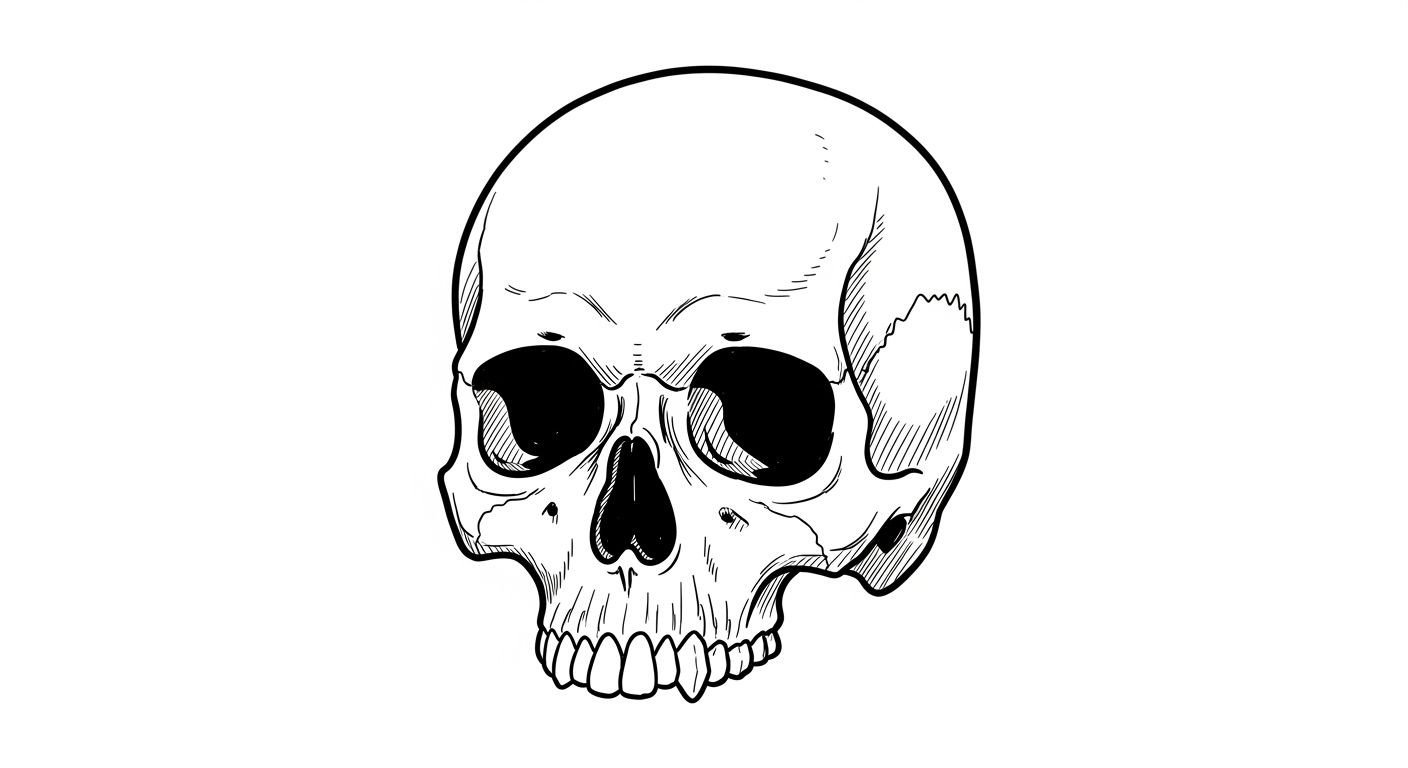
You don’t need a medical degree to nail a skull sketch easy, but a sprinkle of anatomical awareness sure helps. Think of the skull as three main parts: the cranium (that big ol’ dome on top), the eye sockets (deep, mysterious, and perfectly symmetrical), and the jaw (the boss of bite and expression). When you simplify these into ovals, curves, and gentle lines, the skull sketch easy method starts to feel less like biology class and more like connect-the-dots with attitude. Pro tip: sketch light at first—no one’s judging your ghost lines but you. Get the proportions right, and your skull sketch easy piece will look legit even before you add those dramatic crosshatches.
Tools of the trade: What you really need for a skull sketch easy session
Here’s the tea: you don’t need a $200 art kit to create a killer skull sketch easy. All you truly need is a decent pencil (HB or 2B is gold), an eraser that doesn’t crumble like stale cornbread, and paper that won’t ghost you mid-sketch. A blending stump? Nice-to-have. A fancy sketchbook? Optional. But what’s non-negotiable is patience—and maybe a playlist with some dark synthwave or lo-fi beats to set the mood. The beauty of skull sketch easy lies in its raw simplicity: no color, no frills, just graphite meeting paper in a moody little dance. Even if your tools cost under $10 USD, your skull sketch easy results can still slap harder than a Monday morning alarm.
Common beginner mistakes that kill a skull sketch easy vibe
Let’s keep it 100—most skull sketch easy fails happen not because you can’t draw, but because you rush. We’ve seen it: oversized teeth, lopsided eye sockets, a jaw that looks like it’s mid-yawn at a courtroom. Slow down, cowboy. Symmetry is your best friend here, and so is using light guide lines. Another rookie move? Pressing too hard too soon. Graphite doesn’t forgive like white-out—it smudges, tears paper, and leaves regrets. Remember, skull sketch easy isn’t about perfection on the first try; it’s about building layers, learning from shadows, and letting your hand find its rhythm. Mistakes? They’re just part of the character—like scars on a biker’s leather jacket.
Step-by-step guide to your first skull sketch easy masterpiece
Alright, grab that pencil—here’s how we roll with a skull sketch easy from zero to hero in six chill steps. First, lightly sketch an oval for the cranium. Second, draw a vertical line down the center and a horizontal one across the middle—these are your symmetry rails. Third, carve out two almond-shaped eye sockets below that horizontal line, leaving room for the nose cavity underneath. Fourth, sketch a gentle U-shape for the upper jaw, then add the lower jaw like a curved bracket hugging the U. Fifth, drop in the teeth—just simple rectangles, no need to count ‘em unless you’re auditioning for a dental ad. Sixth? Shade like you mean it. Deepen the sockets, add crosshatching to the cranium, and let contrast do the talking. Boom—your skull sketch easy just graduated from doodle to dope.

Why skull sketch easy designs are making a major comeback
Are skull designs still trendy? Heck yeah—and not just for tattoo parlors and heavy metal merch. The skull sketch easy aesthetic has crawled out of goth basements and into high fashion, graphic design, and even minimalist home decor. There’s something timeless about the skull: it’s a memento mori, a symbol of rebellion, a canvas for shadow play. In 2025, we’re seeing skull sketch easy pop up on everything from limited-run tees (think $45 USD streetwear drops) to indie album covers. It’s not about death—it’s about art that stares back. And in a world full of flat, soulless digital graphics, a hand-drawn skull sketch easy feels refreshingly human, raw, and real.
Freehanding your skull sketch easy: tips for ditching the grid
So you wanna go full cowboy and freehand a skull? Respect. The key to a clean skull sketch easy without rulers or grids is rhythm, not rigidity. Start by practicing the basic shapes daily—just 5 minutes of sketching craniums and jaws in your margins or on coffee-stained napkins. Over time, your muscle memory kicks in. When you're ready to go rogue, use your whole arm—not just your wrist—to draw smoother curves. And don’t aim for museum-level precision; aim for vibe. A slightly crooked tooth or uneven socket? That’s personality. That’s *your* skull sketch easy signature. After all, even Van Gogh’s stars weren’t perfectly round—and look how that turned out.
Shading secrets that transform a basic skull sketch easy into art
Here’s the magic sauce: shading. A flat skull sketch easy is cute—but add tonal depth, and suddenly it’s hauntingly alive. Focus your darkest values in the eye sockets, nasal cavity, and under the jawline. Use a blending stump or even your fingertip (clean, please!) to soften gradients on the cranium. Crosshatching works wonders for texture, especially along the temples and cheekbones. And don’t forget reflected light—that subtle glow inside the sockets from ambient bounce? That tiny detail screams “I know what I’m doing” without saying a word. Master this, and your skull sketch easy won’t just sit on the page—it’ll loom.
From sketchbook to streetwear: monetizing your skull sketch easy talent
Got a knack for skull sketch easy? Time to cash in—literally. Artists are selling original sketches on Etsy for $25–$75 USD, turning their skull sketch easy into vector designs for merch, or licensing them to indie brands. Platforms like Redbubble and Society6 let you upload your art and earn passive income every time someone slaps it on a hoodie or phone case. And if you’ve got a following on TikTok or Instagram, time-lapse videos of your skull sketch easy process can rack up serious views—and collab offers. Just remember: protect your work with watermarks and copyright tags. Your sketch might look simple, but that simplicity? It’s worth something.
Where to go next after mastering skull sketch easy
Congrats—you’ve nailed the skull sketch easy grind. But don’t park your pencils just yet. Now’s the time to level up: try skulls with roses, crowns, or cyberpunk goggles. Dive into full-face portraits using the skull as an understructure. Or explore animal skulls—owls, wolves, even dinosaurs—for a wild twist. And if you’re hungry for more beginner-friendly challenges, swing by our guides. Start at the Randall Enos homepage for fresh inspo, browse the Sketch category for technique deep dives, or check out our step-by-step walkthrough in Easy Drawings For Beginners With Pencil Simple Steps. Because every artist’s journey begins with a single line—and yours just got a whole lot sharper.
Frequently Asked Questions
How to sketch a simple skull?
To sketch a simple skull, start with a light oval for the cranium, add guide lines for symmetry, then draw almond-shaped eye sockets, a nasal cavity, and a U-shaped upper jaw. Finish with simple teeth and subtle shading. Keeping your lines loose and proportions balanced is key to a clean skull sketch easy result.
What are some beginner tips for skull drawing?
Beginner tips for skull drawing include practicing basic shapes first, using light pencil strokes, focusing on symmetry, and not rushing the shading. It’s also smart to study real skull references (even 3D models online) to understand depth. These habits ensure your skull sketch easy looks structured, not sloppy.
How to freehand a skull?
To freehand a skull, build muscle memory by sketching the cranium, eye sockets, and jaw repeatedly without rulers. Use your whole arm for fluid lines, embrace slight imperfections, and let your personal style emerge. Freehanding a skull sketch easy is less about precision and more about flow and confidence.
Are skull designs still trendy?
Yes—skull designs are absolutely still trendy in 2025, especially hand-drawn skull sketch easy styles. They’re popular in streetwear, album art, tattoos, and digital illustration because they blend edge with elegance. Their symbolic depth and visual contrast keep them fresh, not faded.
References
- https://www.drawabox.com/lesson/1/line-practice
- https://www.thevirtualinstructor.com/skull-drawing-tutorial.html
- https://www.artistsnetwork.com/art-mediums/drawing/skull-drawing-tips/
- https://www.creativebloq.com/features/skull-art-history