Black Panther And Fantastic Four Alliance Story
- 1.
“Wait, Was Black Panther Originally a Fantastic Four Villain?”—Debunking the Myth with Style
- 2.
The First Appearance That Changed Everything: July 1 ‘66 and the Birth of a Legend
- 3.
From Rival to Ally: How the Fantastic Four Became T’Challa’s Gateway to the Marvel Universe
- 4.
Wakanda Forever Meets Four-Color Glory: Cultural Impact of the Crossover
- 5.
When Vibranium Met Elasticity: The Science Behind the Team-Ups
- 6.
Comic Book Chemistry: Why Their Dynamic Still Feels Fresh
- 7.
Alternate Realities and What-Ifs: Could Black Panther Have Been a Permanent FF Member?
- 8.
From Page to Screen: Why the MCU Hasn’t Fully Explored This Bond (Yet)
- 9.
Collectors’ Corner: Key Issues Every Fan Should Hunt Down
- 10.
Future Threads: Where the Story Could Go Next
Table of Contents
black panther and fantastic four
“Wait, Was Black Panther Originally a Fantastic Four Villain?”—Debunking the Myth with Style
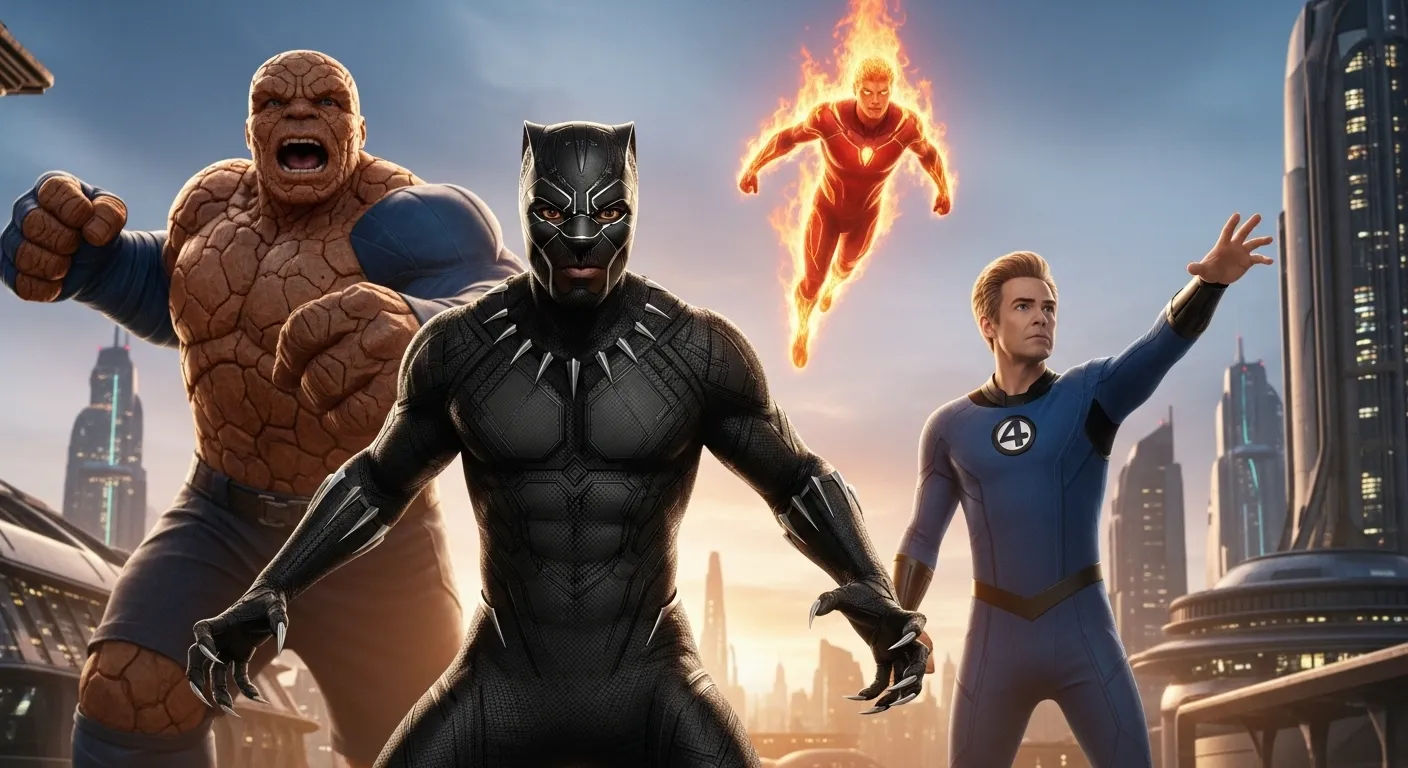
Hold up—did someone seriously say Black Panther was a *villain* in the Fantastic Four? Bro, you must’ve been binging some wild fanfic or let your algorithm feed you fake news from 2007 MySpace forums. Nah, not even close. When T’Challa first rolled into Fantastic Four #52 (July 1966), he wasn’t out to trash Reed’s lab or swipe Sue’s invisibility cheat codes. He was auditionin’ them. Like, “Y’all call yourselves Earth’s Mightiest Heroes? Prove it.” And honestly? They kinda passed—with extra credit for surviving his vibe check. That first meet-up wasn’t about evil monologues or world domination—it was about respect, brains over brawn, and that smooth-as-silk Wakandan confidence. Stan Lee and Jack Kirby dropped a cultural mic without even realizing it: the first Black superhero in mainstream American comics, and he showed up lookin’ like he owned the whole block—which, plot twist, he literally did. So no, Black Panther wasn’t a villain. He was the glow-up Marvel didn’t know it needed.
The First Appearance That Changed Everything: July 1 ‘66 and the Birth of a Legend
Let’s time-travel back to summer ’66—when muscle cars ruled the streets, Motown was bumpin’ on every radio, and Marvel Comics dropped a straight-up game-changer. In Fantastic Four #52, readers met this mysterious African king who didn’t throw fists—he threw intellect, tech, and heart. This wasn’t just another guest spot; it was the debut of Black Panther, a dude who’d go on to rewrite the whole superhero playbook. The cover alone—T’Challa standing tall, arms crossed, cape flappin’ like he just walked off a throne—screamed “I run this.” Inside? Pure comic poetry. He slipped into the Baxter Building like it was nothing, outsmarted Reed like it was a Tuesday crossword, and left the whole team shook. And get this—he didn’t throw a punch until absolutely necessary. That’s the soul of the black panther and fantastic four dynamic: challenge wrapped in mutual respect. Not a fight—a handshake forged in vibranium.
From Rival to Ally: How the Fantastic Four Became T’Challa’s Gateway to the Marvel Universe
After that legendary first meet-cute, T’Challa didn’t ghost the FF—he hung around. Joined their crew for a hot minute, even dated Sue Storm (awkward much?). But more importantly, the black panther and fantastic four alliance opened doors wide open. Through them, T’Challa tapped into global intel, next-gen science, and—let’s keep it real—a whole lotta street cred. The FF weren’t just New York’s first family—they were Marvel’s launchpad to the big leagues. By teaming up with them, Black Panther went from “Who’s that guy?” to “Oh, that’s the king who schooled the smartest man alive.” His presence added layers: diplomacy, legacy, and a worldview that didn’t revolve around Western capes. Plus, let’s not front—his tech didn’t just match Reed’s; sometimes it flat-out smoked it. Wakanda wasn’t just a country—it was a power move.
Wakanda Forever Meets Four-Color Glory: Cultural Impact of the Crossover
Think about this: in 1966, America was deep in civil rights battles, and Marvel dropped a Black king who was smarter than Einstein, richer than Bezos, and cooler than James Dean—all while rockin’ a suit made of alien metal. The black panther and fantastic four crossover wasn’t just comic book filler; it was quiet revolution. Kids in Harlem, Chicago, L.A.—they finally saw themselves reflected in a hero who wasn’t a sidekick or a stereotype. Just pure, unapologetic excellence. And the Fantastic Four? They didn’t treat him like the “token.” They treated him like an equal. That narrative choice mattered. It told readers: heroes come in every shade, and leadership ain’t got a zip code. Decades later, that legacy still echoes in every “Wakanda Forever” salute at Comic-Con.
When Vibranium Met Elasticity: The Science Behind the Team-Ups
Reed Richards builds machines that bend space-time like it’s taffy. T’Challa commands a metal that soaks up kinetic energy like a sponge and powers entire cities. So when the black panther and fantastic four collide in the lab? Straight-up magic. Their collabs blend Wakandan bio-tech with Reed’s theoretical wizardry—like that time they reverse-engineered a Kree death ray using Panther Habitats and unstable molecules. It’s not just cool; it’s storytelling genius. The contrast highlights what each brings: Reed’s “what if?” curiosity vs. T’Challa’s “should we?” caution, Sue’s empathy vs. Shuri’s no-nonsense pragmatism (when she clocks in). And let’s be real—if the FF hadn’t backed him early, would the world have trusted Wakandan tech? Doubt it. Their partnership gave T’Challa global clout, proving innovation doesn’t always wear a lab coat—it sometimes wears a panther cowl.
Comic Book Chemistry: Why Their Dynamic Still Feels Fresh
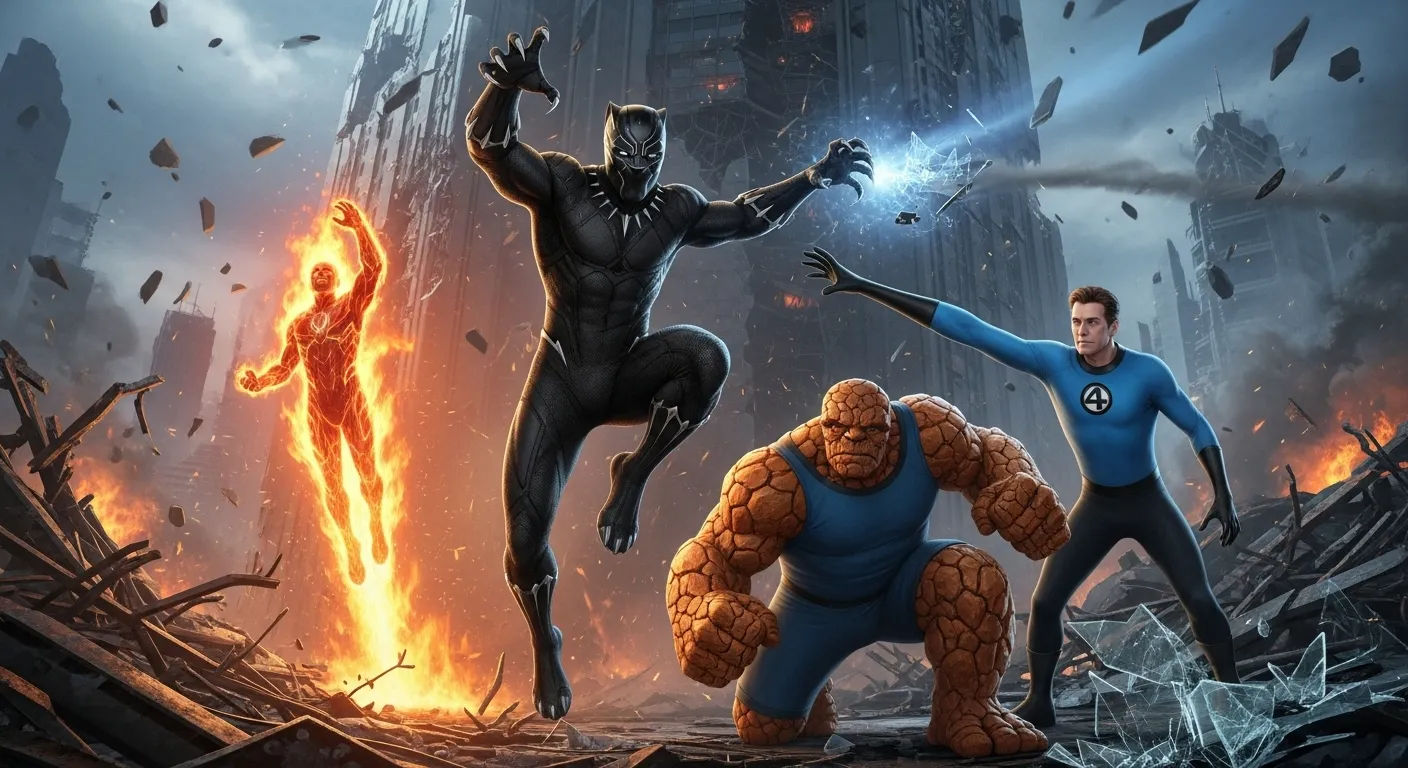
Some duos age like expired milk. Others? Like small-batch bourbon—better with time. The black panther and fantastic four chemistry’s in the latter camp. Why? ‘Cause it’s built on contrast, not beef. Reed’s wide-eyed idealism bounces off T’Challa’s grounded realism. Johnny’s “YOLO” energy meets T’Challa’s chill patience. Ben’s ride-or-die loyalty mirrors T’Challa’s devotion to his people. It’s never about who wins—it’s about how they level each other up. Even in modern runs, like Marvel Knights: Black Panther or FF by Fraction, their scenes feel natural, like two old friends debating ethics over coffee. Writers get it: this ain’t a rivalry. It’s a conversation between two visions of progress—one community-first, one individual-driven. And in today’s messy world, that dialogue hits harder than ever.
Alternate Realities and What-Ifs: Could Black Panther Have Been a Permanent FF Member?
Picture this: T’Challa as the fifth Fantastic Four member—not just a guest star, but part of the core squad. In some universes, it almost happened. In What If? #33, he joins after Doom goes full traitor. In others, he steps in for Johnny during a cosmic meltdown. But here’s the real tea: Marvel always pulls back. Why? ‘Cause T’Challa’s strength is his independence. Making him a permanent FF member risks turning a sovereign king into just another teammate. The magic of the black panther and fantastic four story lives in the balance between alliance and autonomy. He shows up when needed, drops wisdom when asked, but never checks his crown at the door. That tension keeps both sides sharp—and fans endlessly theorizing over late-night Discord calls.
From Page to Screen: Why the MCU Hasn’t Fully Explored This Bond (Yet)
Look, we stan the MCU. But where’s the black panther and fantastic four bromance on screen? Crickets. Yeah, T’Challa popped up in Civil War and vibed with Cap, but the FF? Still ghosts in live-action. With the new Fantastic Four reboot cookin’, fans are beggin’ for a callback—maybe a young T’Challa consulting Reed during his MIT days, or Shuri and Sue swapping notes on force fields over Zoom. It’s not just fan service; it’s narrative gold. The MCU’s already built Wakanda as a sci-fi utopia. Pairing it with the FF’s brainy, cosmic roots could take both franchises to the next galaxy. Until then, we’re stuck re-reading FF #52 and dreaming of crossovers that honor that OG spark.
Collectors’ Corner: Key Issues Every Fan Should Hunt Down
If you’re serious about the black panther and fantastic four lore, these issues are non-negotiable:
- Fantastic Four #52–53 – The OG debut and resolution.
- Avengers #87 – Where T’Challa ditches the FF to join the Avengers (yes, drama!)
- Marvel Team-Up #101 – A rare Spidey-Panther-FF trio.
- Black Panther Vol. 3 #1 (1998) – Priest’s run recontextualizes everything.
- FF #16–23 (2012) – Matt Fraction’s take on legacy and tech.
Pro tip: A CGC 9.0 of FF #52 can fetch over $10,000 USD. But even a dog-eared copy from your uncle’s garage carries history. These aren’t just comics—they’re cultural artifacts with receipts.
Future Threads: Where the Story Could Go Next
So what’s next for the black panther and fantastic four? With the Kang saga winding down and the Multiverse Saga ramping up, the door’s wide open. Maybe T’Challa mentors Franklin Richards. Maybe Shuri and Reed co-develop a quantum bridge over Wakandan coffee. Or—plot twist—maybe Doom plays both sides like chess pieces, forcing them to reunite. Whatever happens, the foundation’s rock-solid. And hey, if you’re hungry for more deep dives, swing by Randall Enos for weekly geek breakdowns, check out our Comics section for genre analysis, or read our full retrospective on Fantastic 4 Black Panther Wakanda Team. The legacy’s alive—and we’re just getting started.
Frequently Asked Questions
Is Black Panther part of the Fantastic Four?
Not as a permanent member, but yes—Black Panther has been a temporary ally and even filled in as a reserve member during key storylines. His relationship with the black panther and fantastic four is more strategic partnership than official membership, though their bond remains one of Marvel’s most respected crossovers.
Was Black Panther originally a Fantastic Four villain?
Nope, that’s a common myth. When Black Panther first appeared in Fantastic Four #52, he posed a challenge to test their worthiness—not to destroy them. The black panther and fantastic four encounter was framed as a trial of heroes, not a villainous ambush. T’Challa’s motives were noble from jump street.
Is Black Panther going to be in Avengers: Doomsday?
As of now, there’s no official confirmation that Black Panther will appear in Avengers: Doomsday. However, given the multiversal themes and the need for legacy heroes, a variant or spiritual successor tied to the black panther and fantastic four legacy could very well play a role. Keep your eyes peeled—and your vibranium sensors charged.
When did the Black Panther first appear in Fantastic Four?
Black Panther made his historic debut in Fantastic Four #52, cover-dated July 1966. This landmark issue marked the first appearance of the character and established the foundational dynamic between the black panther and fantastic four that continues to influence Marvel storytelling today.
References
- https://www.marvel.com/comics/issue/13432/fantastic_four_1961_52
- https://www.cbr.com/black-panther-first-appearance-fantastic-four-explained/
- https://www.denofgeek.com/comics/black-panther-fantastic-four-history/
- https://www.comicbookresources.com/rankings/the-best-black-panther-and-fantastic-four-team-ups