Simple Skeleton Drawing Makes Spooky Art Accessible
- 1.
What exactly is a simple skeleton drawing and why do kids love it?
- 2.
How to draw a skeleton very very easy—step by step without losing your mind
- 3.
Simple skeleton drawing for grade 4: spooky but educational
- 4.
How to draw a skull easy and simple without turning it into a potato
- 5.
Breaking down “what is skeleton easy” for beginners and curious minds
- 6.
Why simple skeleton drawing is trending in digital art and classrooms
- 7.
Tools and tricks for nailing your simple skeleton drawing
- 8.
Common mistakes (and how to avoid them) when doing a simple skeleton drawing
- 9.
From doodle to decor: creative uses for your simple skeleton drawing
- 10.
Free resources and inspiration for mastering simple skeleton drawing
Table of Contents
simple skeleton drawing
What exactly is a simple skeleton drawing and why do kids love it?
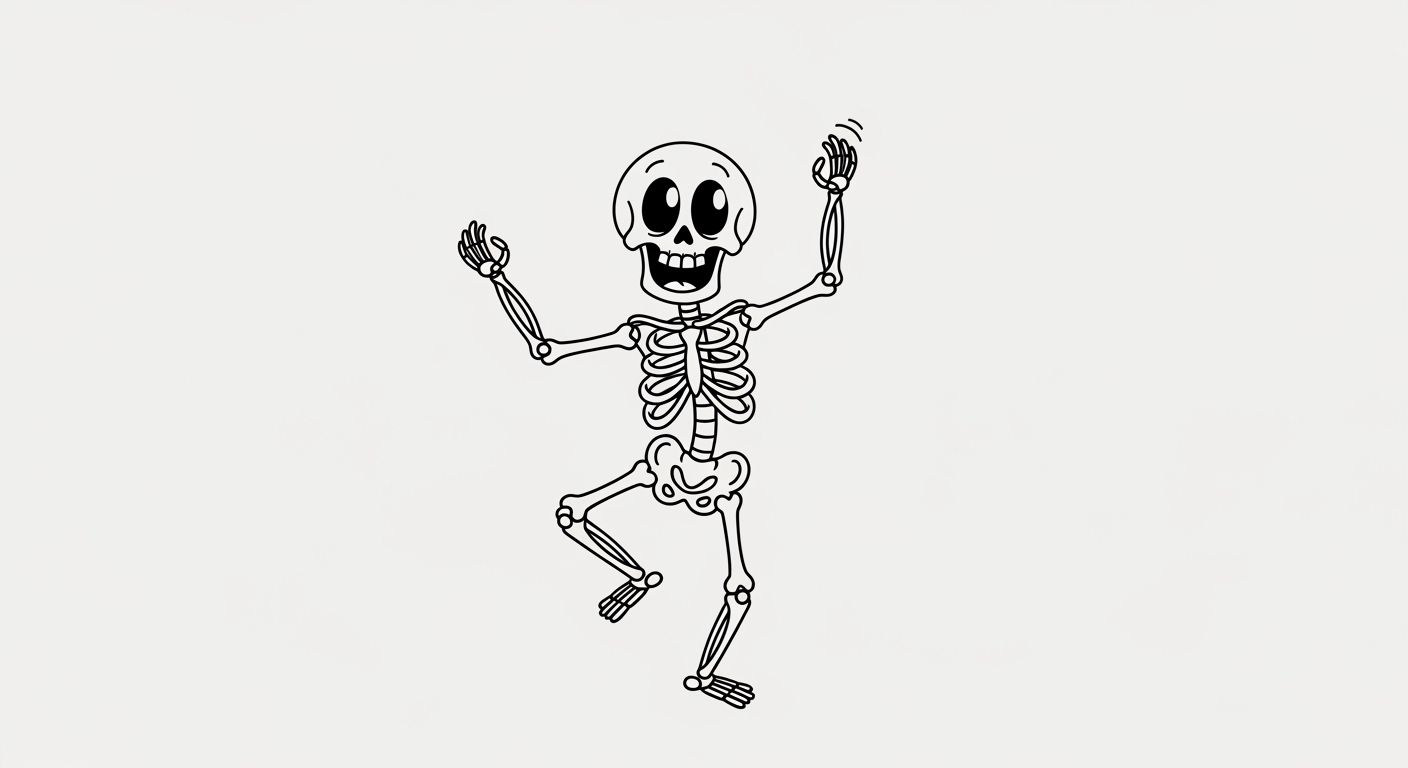
Ever tried drawing a skeleton and ended up with something that looks like a chicken doing yoga? Yeah, we’ve been there too. But here’s the thing—a simple skeleton drawing isn’t about anatomical perfection. Nah, it’s about capturing the spooky charm of bones in the easiest, most fun way possible. Especially for grade 4 learners or beginner artists, a simple skeleton drawing is like the gateway drug to all things macabre-meets-adorable. It’s minimal, it’s playful, and honestly? It’s kinda therapeutic. You don’t need fancy tools—just a pencil, paper, and maybe a little Halloween spirit bubbling in your chest.
How to draw a skeleton very very easy—step by step without losing your mind
Alright, buckle up, because we’re breaking down how to draw a skeleton very very easy like we’re teaching our little cousin in elementary school. First, sketch a circle for the skull—no need to be Picasso. Then, add two dots for eyes and a zigzag or “U” shape for the jaw. Boom, skull done. Next, draw a vertical line down for the spine. Add ribs like little parentheses hugging the spine. Pelvis? Just a sideways “M” or a bowl shape. Arms and legs? Straight lines with ovals for hands and feet. Voilà! You just made a simple skeleton drawing that even your cat would nod at approvingly (maybe).
Simple skeleton drawing for grade 4: spooky but educational
Teachers, listen up! A simple skeleton drawing isn’t just artsy—it’s a sneaky way to teach anatomy. For grade 4 students, it’s visual, tactile, and way more engaging than a textbook diagram. When kids draw bones themselves, they remember names like “femur” or “skull” better. Plus, it’s Halloween season—why not merge science and spookiness? “What is a skeleton for grade 4?” you ask. It’s the bony framework that holds us up, protects our organs, and yes, makes us look like walking Halloween props when drawn in its simplest form.
How to draw a skull easy and simple without turning it into a potato
Let’s be real—most of us start with the skull and immediately panic. But how to draw a skull easy and simple is easier than you think. Begin with an oval, not a perfect circle—skulls ain’t basketballs. Add two eye sockets as big hollow circles. Nose? Just two tiny dots or a triangle. For the teeth, draw a curved line with little rectangles sticking out. Keep it rough, keep it playful. Remember, this isn’t a medical illustration—it’s a simple skeleton drawing meant to giggle at, not dissect. And if it looks like a sad ghost? Even better.
Breaking down “what is skeleton easy” for beginners and curious minds
So, what is skeleton easy? In plain English: it’s your body’s internal scaffolding. But in art terms? It’s a minimalist line drawing that captures the essence of bones without overcomplicating things. A simple skeleton drawing strips away muscles, skin, and drama—leaving just the bare (pun intended) structure. For newbies, this is gold. It builds confidence. You finish one and think, “Wait… I can actually draw?” Yep, you can. And it all starts with understanding that “easy” doesn’t mean lazy—it means smart simplification.
Why simple skeleton drawing is trending in digital art and classrooms
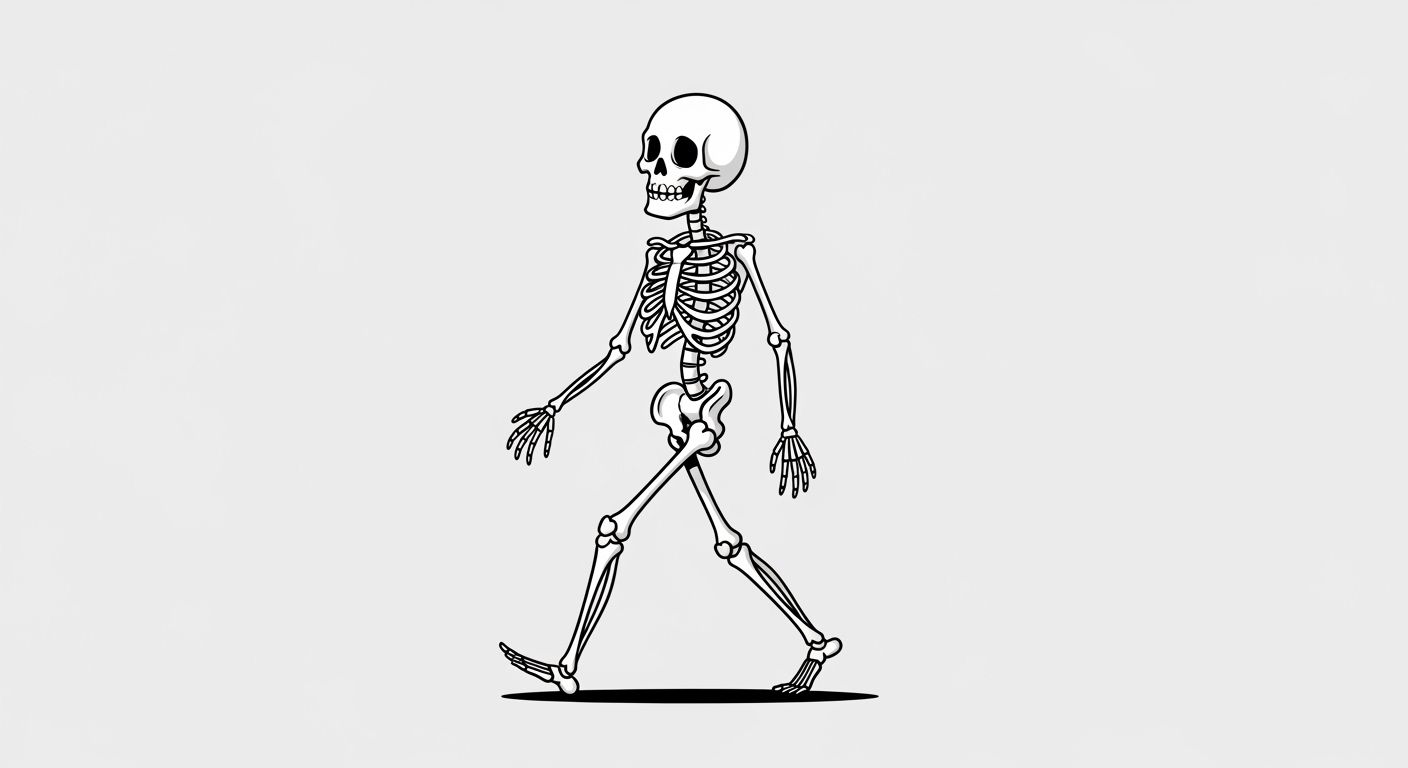
From TikTok doodle challenges to elementary school art corners, the simple skeleton drawing is having a moment. Why? Because it’s versatile. You can turn it into stickers, tattoos (temporary, please!), or classroom posters. Teachers use it to explain biology; artists use it to explore form and negative space. Plus, in the age of digital minimalism, less is more. A clean, bold-line skeleton says “I’m spooky but I’ve got my life together.” And honestly? That’s the vibe we’re all chasing in 2025.
Tools and tricks for nailing your simple skeleton drawing
You don’t need a $200 stylus or fancy software—though if you’re using Sketch Up For Mac Enhances 3D Design On Apple, hey, more power to ya. For most of us, a HB pencil, eraser, and printer paper work just fine. Pro tip: trace over your lines with a black marker for that crisp comic-book look. Use reference images (but don’t get obsessed—this ain’t med school). And if you mess up? Call it “abstract bone art” and move on. The goal of a simple skeleton drawing is joy, not judgment.
Common mistakes (and how to avoid them) when doing a simple skeleton drawing
Mistake #1: Making the skull too small. Bones don’t shrink, folks. Mistake #2: Forgetting the spine—it’s the backbone of your drawing (literally). Mistake #3: Over-detailing. Remember, this is a simple skeleton drawing, not a forensic reconstruction. Keep joints basic: circles or ovals will do. And don’t stress about symmetry—real skeletons aren’t perfectly symmetrical either. Embrace the wobble. It’s what makes your art human… or undead.
From doodle to decor: creative uses for your simple skeleton drawing
Once you’ve got your simple skeleton drawing down, the world’s your oyster—or your haunted oyster, if you prefer. Turn it into greeting cards for Halloween. Print it on T-shirts (black, obviously). Frame it and hang it next to your plants for “spooky cottagecore” energy. Teachers can laminate them for classroom labeling games (“Find the femur!”). The point is: don’t let that sketch rot in your notebook. Let it haunt the world in the best way possible.
Free resources and inspiration for mastering simple skeleton drawing
Stuck? Head over to the Randall Enos homepage for more beginner-friendly guides. Dive into the Sketch category for tutorials on everything from skulls to full-body bone buddies. And if you’re feeling techy, check out how modern tools like SketchUp are making 3D bone modeling accessible—even if you’re just starting with 2D scribbles. Bottom line: practice, play, and don’t take yourself too seriously. After all, skeletons don’t have skin to blush with.
Frequently Asked Questions
How to draw a skeleton very very easy?
To draw a skeleton very very easy, start with a circle for the skull, add simple eye sockets and a jawline, then sketch a straight spine with ribcage lines on each side. Use basic shapes like ovals for pelvis and limbs. Keep lines clean and minimal—this is a simple skeleton drawing, not a medical chart. Focus on flow over accuracy, and you’ll have a spooky little friend in under five minutes.
What is a skeleton for grade 4?
For grade 4 students, a skeleton is the hard framework inside the body made of bones that supports us, protects organs like the brain and heart, and helps us move. In art class, it’s often explored through a simple skeleton drawing to make learning fun and visual—especially around Halloween or during science units on the human body.
How to draw a skull easy and simple?
To draw a skull easy and simple, begin with an oval shape. Add two large circular eye sockets, a small triangle or dots for the nose, and a curved line with rectangular teeth for the mouth. Keep proportions loose and lines sketchy. This approach is perfect for a simple skeleton drawing that’s more cute than creepy—and way less intimidating than it sounds.
What is skeleton easy?
“Skeleton easy” refers to a simplified understanding or representation of the human skeleton—often used in education or beginner art. In drawing, it means creating a simple skeleton drawing using basic shapes and minimal detail to capture the essence of bones without overwhelming complexity. It’s accessible, fun, and perfect for young learners or casual artists.
References
- https://www.nationalgeographic.com/science/article/human-skeleton-facts
- https://www.britannica.com/science/skeleton
- https://www.education.com/activity/article/skeleton-drawing-for-kids/
- https://www.sciencekids.co.nz/sciencefacts/humans/skeleton.html
- https://artsandactivities.com/drawing-the-human-skeleton-a-beginners-guide/