Fantastic 4 1978 Animated Series
- 1.
“Wait, Why Did Herbie Replace the Human Torch?”—Unpacking the Quirky Swap in the ‘78 Toon
- 2.
Meet the OG Squad: Who Were the Original Fantastic Four?
- 3.
Flame On or Flame Gone? The Cultural Impact of Losing Johnny Storm
- 4.
Animation Aesthetic: Groovy Visuals and That ‘70s Vibe
- 5.
Behind the Scenes: Why NBC Said “No Torch, Yes Herbie”
- 6.
Voice Cast & Soundtrack: Who Brought the FF to Life?
- 7.
Fan Reactions Then vs. Now: From Confusion to Cult Classic
- 8.
Comparing Eras: How the ‘78 Series Stacks Up Against Other FF Adaptations
- 9.
Why Did People Not Like Fantastic Four 2015? A Cautionary Tale
- 10.
Legacy and Where to Watch: Keeping the ‘78 Flame Alive
Table of Contents
fantastic 4 1978
“Wait, Why Did Herbie Replace the Human Torch?”—Unpacking the Quirky Swap in the ‘78 Toon
Yo, picture this: you’re sprawled on the shag carpet in your footie pajamas, bowl of Sugar Pops in hand, ready to watch Johnny Storm light up the screen like a Fourth of July sparkler… and instead, you get a talking VW Beetle with eyeballs? Yeah, welcome to the fantastic 4 1978 animated series—where Marvel and DePatie-Freleng pulled off one of the weirdest power moves in cartoon history. They swapped out the Human Torch for H.E.R.B.I.E. (Humanoid Experimental Robot, B-Type, Integrated Electronics). And no, it wasn’t ’cause they blew the whole SFX budget on glitter—though honestly, that’d make sense. Word on the street? NBC was cooking up their own live-action Human Torch show at the time, so Marvel didn’t wanna step on their cornflakes. So instead of Johnny throwing flames, we got Herbie beepin’ like a garage-sale Roomba with daddy issues. Fans lost their minds—but hey, at least the robot didn’t accidentally torch the Baxter Building. Probably.
Meet the OG Squad: Who Were the Original Fantastic Four?
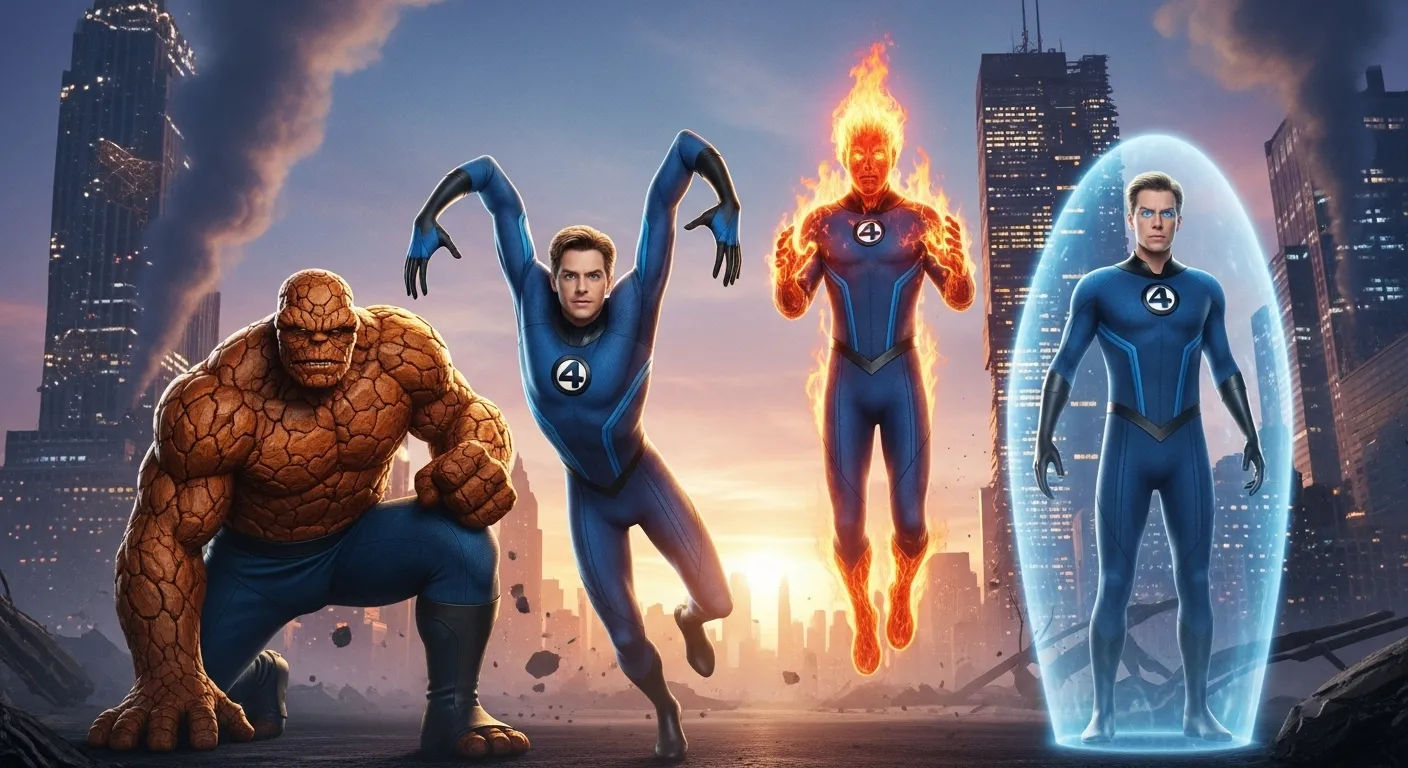
Before Herbie rolled in like he owned the place, the Fantastic Four were straight-up comic book legends: Reed Richards (Mister Fantastic), Sue Storm (Invisible Girl), Ben Grimm (The Thing), and Johnny Storm (Human Torch). These four blasted off in a rocket soaked in cosmic rays back in ’61 and came back lookin’ like they’d been through a sci-fi blender—stretchy, invisible, rocky, and on fire. That’s Marvel’s First Family, baby. Their vibe? Equal parts lab experiment and chaotic family reunion at Grandma’s house after Thanksgiving. When the fantastic 4 1978 dropped, fans expected that same messy, lovable energy. Instead, they got three heroes and a robot sidekick who looked like he got cut from a rejected Disney Afternoon pilot. Still, somehow, the heart of the team—curiosity, loyalty, and egos bigger than Texas—survived the translation. Even if Johnny’s absence left a flaming hole nobody could quite fill.
Flame On or Flame Gone? The Cultural Impact of Losing Johnny Storm
Ditching the Human Torch wasn’t just a weird casting twist—it threw the whole team’s chemistry outta whack. Johnny wasn’t just the class clown; he was the glue. His beef with Ben, his big-brother protectiveness over Sue, his wild energy that kept Reed from floating off into nerd-space… all gone. In the fantastic 4 1978 episodes, Herbie tried to step up with beeps and logic puzzles, but let’s keep it 100: a robot can’t pull off “hothead” like a Jersey kid with a lighter and zero chill. Critics called it a watered-down version of the team. Fans just called it “straight-up bizarre.” And yet, the show ran for two seasons. Maybe ’cause kids in bell-bottoms didn’t care—they just wanted giant monsters and a stretchy dad who could grab snacks from across the room. But for longtime comic readers? It felt like watching Springsteen play without the E Street Band. Just… off.
Animation Aesthetic: Groovy Visuals and That ‘70s Vibe
Let’s gab about style for a sec. The fantastic 4 1978 cartoon was drenched in that sweet, sweet ‘70s sauce—bold outlines, colors that popped like a lava lamp on espresso, and action scenes that moved slower than a DMV line on a Monday. The animation wasn’t exactly Pixar-level smooth (heck, Pixar didn’t even exist yet), but it had soul. Reed stretched like taffy pulled by a sleepy cousin at a county fair. Ben’s orange mug practically glowed under the old tube TV. And Herbie? He rolled in like he just won the Powerball and bought himself a fresh coat of wax. Yeah, they reused backgrounds like it was going outta style—and fight scenes looped like a broken jukebox—but it worked. Saturday mornings were about cereal breath, mismatched socks, and heroes who didn’t need to be perfect to feel real. The fantastic 4 1978 look wasn’t polished—it was *personality*, baby.
Behind the Scenes: Why NBC Said “No Torch, Yes Herbie”
So why’d Herbie really take Johnny’s spot? Let’s cut the fluff. Sure, the official story was “rights conflict,” but insiders say it was also about safety and shelf space. Late ‘70s networks were sweating bullets over kids trying to copy fire powers—remember when every cartoon ended with “Don’t try this at home”? A robot? Totally safe. Plus, you could slap Herbie on lunchboxes, action figures, even Happy Meal toys. Johnny lighting up? Might’ve inspired backyard stunts involving hairspray and birthday candles. Not ideal. So Marvel pivoted fast—whipped up Herbie first in the comics (Fantastic Four #209, 1979), then shoved him into the cartoon like he’d always belonged. Smart business move? Maybe. Soulful storytelling? Nah. But the fantastic 4 1978 gamble shows how sometimes, playing it safe kills the cool—but keeps the lights on.
Voice Cast & Soundtrack: Who Brought the FF to Life?
Alright, mic check—one, two! The voice work in the fantastic 4 1978 series? Low-key legendary. Gerald Mohr (Reed) sounded like your high school physics teacher who secretly moonlighted as a superhero. Paul Frees—the same dude who gave us Boris Badenov and the Ghost Host in Disney’s Haunted Mansion—voiced both Ben Grimm and the Watcher with a voice like gravel wrapped in velvet. June Foray (Sue) brought warmth with a side of steel—you knew not to mess with her. And Herbie? Didn’t say a word. Just beeped, whirred, and occasionally honked like a confused NYC cab. The theme song? Pure synth-funk gold, belting out “They’re the Faaaantastic Four!” like it was gospel. No subtlety, all swagger. It wasn’t Shakespeare—but it stuck in your head like gum on a sneaker. And honestly? That’s Saturday morning TV in a nutshell.
Fan Reactions Then vs. Now: From Confusion to Cult Classic
Back in ’78, fans were split down the middle. Older heads missed Johnny like they missed Blockbuster Fridays. Kids? Thought Herbie was the coolest thing since Pop-Tarts. Fast-forward to today, and the fantastic 4 1978 series has cult status. Nostalgia’s a heck of a drug, y’know? Reddit threads dissect Herbie’s finest moments like it’s film school. YouTube compilations rack up views like it’s TikTok. Even Marvel gave it a nod—Herbie popped up in Spider-Man: Into the Spider-Verse as a blink-and-you-miss-it easter egg. What once felt like a misfire is now a time capsule: flawed, funky, and full of heart. It reminds us that not every adaptation needs to be flawless—sometimes, it just needs to be *there*, sparking joy (or utter bewilderment) in a generation of wide-eyed couch potatoes.
Comparing Eras: How the ‘78 Series Stacks Up Against Other FF Adaptations
Let’s rank ‘em real quick:
- 1967 Cartoon: Cheap as dollar-store socks, choppy as a dial-up connection—but hey, Johnny’s there!
- Fantastic 4 1978: No Torch, but smoother animation and actual writing.
- 1994 Series: Darker, moodier, closer to the comics—but kinda like your emo cousin at a BBQ.
- 2005 Films: Shiny, slick, but about as deep as a kiddie pool.
- 2015 Film: We don’t talk about that. Seriously. Don’t make us.
The fantastic 4 1978 sits in this weird sweet spot—better than the ‘67 version, less brooding than the ‘94 take. It’s the awkward middle child of FF adaptations: not the favorite at dinner, but the one who tells the best stories later. And unlike the universally roasted 2015 reboot (more on that disaster in a sec), the ‘78 series never tried too hard to be “cool.” It just *was*. And sometimes, that’s more than enough.
Why Did People Not Like Fantastic Four 2015? A Cautionary Tale
Ah, the 2015 flick. Where do we even begin? Tone-deaf, joyless, and stripped of everything that made the FF feel like your weird, super-powered neighbors. Zero banter. Zero family feels. Just a bunch of teens moping around a government lab like they got detention. Compare that to the fantastic 4 1978 series—sure, it had a robot instead of a human torch, but it still *smiled*. It leaned into the absurdity like it was part of the fun. The 2015 movie forgot the FF aren’t just superheroes—they’re a *family*. And families bicker, laugh, and sometimes turn into walking rocks. The backlash hit faster than a Wi-Fi drop during a Zoom call. Critics shredded it. Fans ghosted it. Box office? Flopped harder than a soufflé in a thunderstorm. Moral of the story? Don’t suck the soul outta Marvel’s First Family. Ever.
Legacy and Where to Watch: Keeping the ‘78 Flame Alive
So where’s the fantastic 4 1978 series hangin’ these days? Not on Disney+, sadly. But bootleg DVDs, YouTube rips, and fan-run archives keep it alive like a vintage muscle car in a garage. Collectors snap up original VHS tapes for $20–$50 on eBay like they’re rare baseball cards. And if you’re new to the FF scene and curious about Marvel’s strangest era? Give it a spin—it’s a wild ride. Craving more deep dives? Swing by Randall Enos for weekly geek breakdowns, check out our Comics section for genre analysis, or read our full retrospective on Fantastic 4 The Animated Series Hero Episodes. Because even Herbie—yeah, that little beeping jalopy—deserves his moment in the sun.
Frequently Asked Questions
Why did Herbie replace the human torch?
Herbie replaced the Human Torch in the fantastic 4 1978 animated series primarily due to rumored rights conflicts with a potential live-action Human Torch project and network concerns about children imitating fire-based stunts. Marvel introduced H.E.R.B.I.E. as a safer, marketable alternative that avoided those issues while keeping the team dynamic intact—sort of.
Who were the original Fantastic Four?
The original Fantastic Four consist of Reed Richards (Mister Fantastic), Sue Storm (Invisible Girl), Ben Grimm (The Thing), and Johnny Storm (Human Torch). This core lineup debuted in 1961 and defined Marvel’s First Family. The fantastic 4 1978 series notably replaced Johnny with the robot H.E.R.B.I.E., altering the classic quartet.
Why did people not like Fantastic Four 2015?
Audiences disliked the 2015 Fantastic Four film for its dark, joyless tone, lack of family chemistry, poor character development, and deviation from the source material’s spirit. In contrast, even the quirky fantastic 4 1978 cartoon retained the humor and heart that fans associate with the team.
What is the f4 cartoon from 1978?
The F4 cartoon from 1978 is an animated series titled The New Fantastic Four, produced by DePatie-Freleng Enterprises. It featured Reed, Sue, Ben, and the robot H.E.R.B.I.E. instead of Johnny Storm. Despite its odd substitution, the fantastic 4 1978 series is remembered for its groovy animation, memorable voice cast, and nostalgic charm.
References
- https://www.marvel.com/tv-shows/the-new-fantastic-four-1978
- https://www.animationmagazine.net/history/the-strange-case-of-herbie-the-robot-in-the-fantastic-four/
- https://www.cbr.com/fantastic-four-1978-cartoon-herbie-human-torch-explained/
- https://www.denofgeek.com/tv/fantastic-four-1978-animated-series-retrospective/