Crocodile Sketch Quick Wildlife Ideas
- 1.
Why a crocodile sketch captures the wild soul better than any zoo photo
- 2.
The anatomy of a killer crocodile sketch: more than just pointy teeth
- 3.
Tools of the trade: what you really need for a pro-level crocodile sketch
- 4.
Step-by-step breakdown: turning chaos into a clean crocodile sketch
- 5.
Why artists love the crocodile sketch: symbolism, soul, and Southern grit
- 6.
Common mistakes that turn your crocodile sketch into a confused lizard
- 7.
From doodle to masterpiece: how daily practice transforms your crocodile sketch
- 8.
Crocodile sketch vs. alligator sketch: subtle differences that matter
- 9.
Fun facts that’ll spice up your next crocodile sketch session
- 10.
Where to share and grow your crocodile sketch skills in the U.S. art scene
Table of Contents
crocodile sketch
Why a crocodile sketch captures the wild soul better than any zoo photo
Ever tried drawing something that’s got more attitude than your barista on a Monday morning? That’s the crocodile sketch for ya—part predator, part poetry, all personality. Unlike snapping a pic at the local zoo (yawn), sketching a croc forces you to reckon with every ridge, scale, and slitted eye that’s seen more drama than a Netflix true-crime doc. A crocodile sketch ain’t just lines on paper; it’s a conversation with 200 million years of evolutionary swagger. We’re talkin’ primal geometry, raw texture, and that “don’t-test-me” jawline that even marble statues envy.
The anatomy of a killer crocodile sketch: more than just pointy teeth
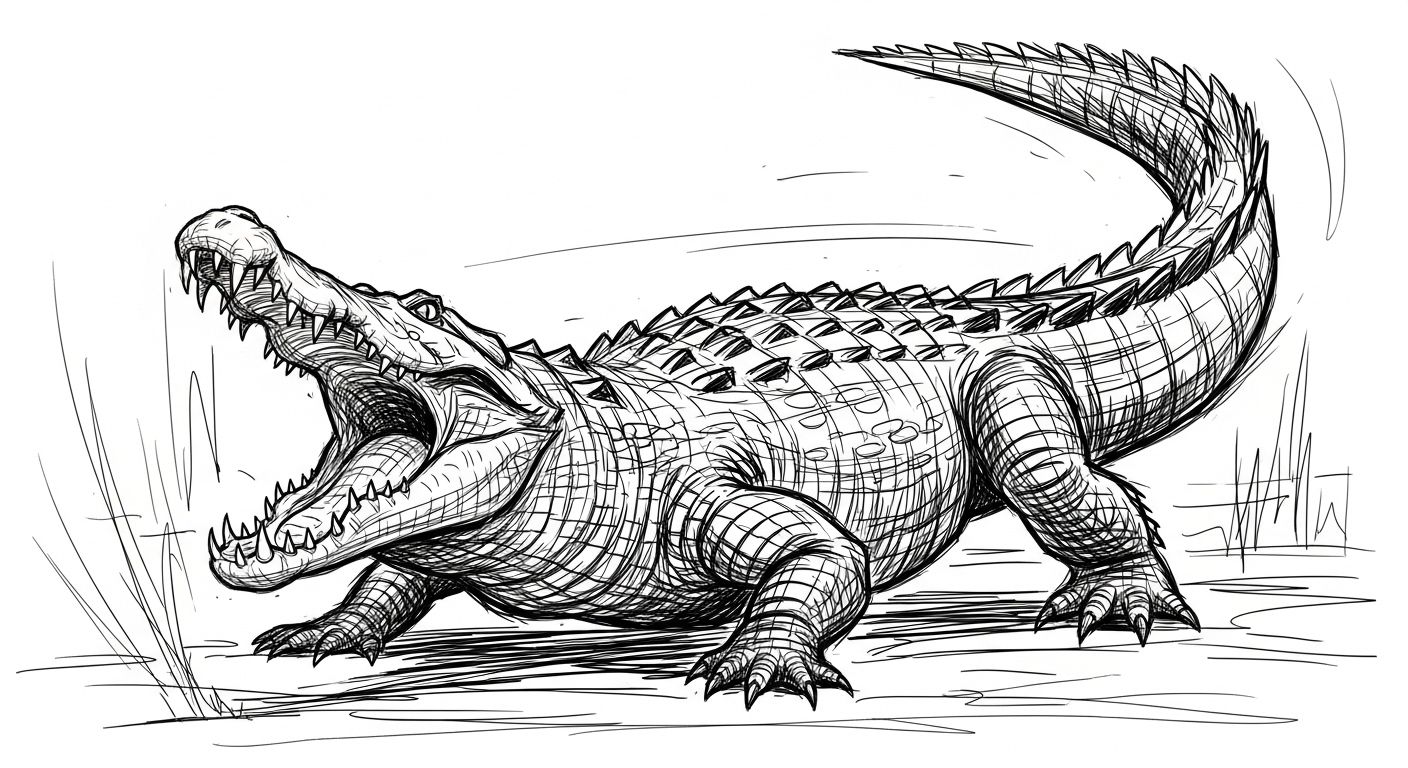
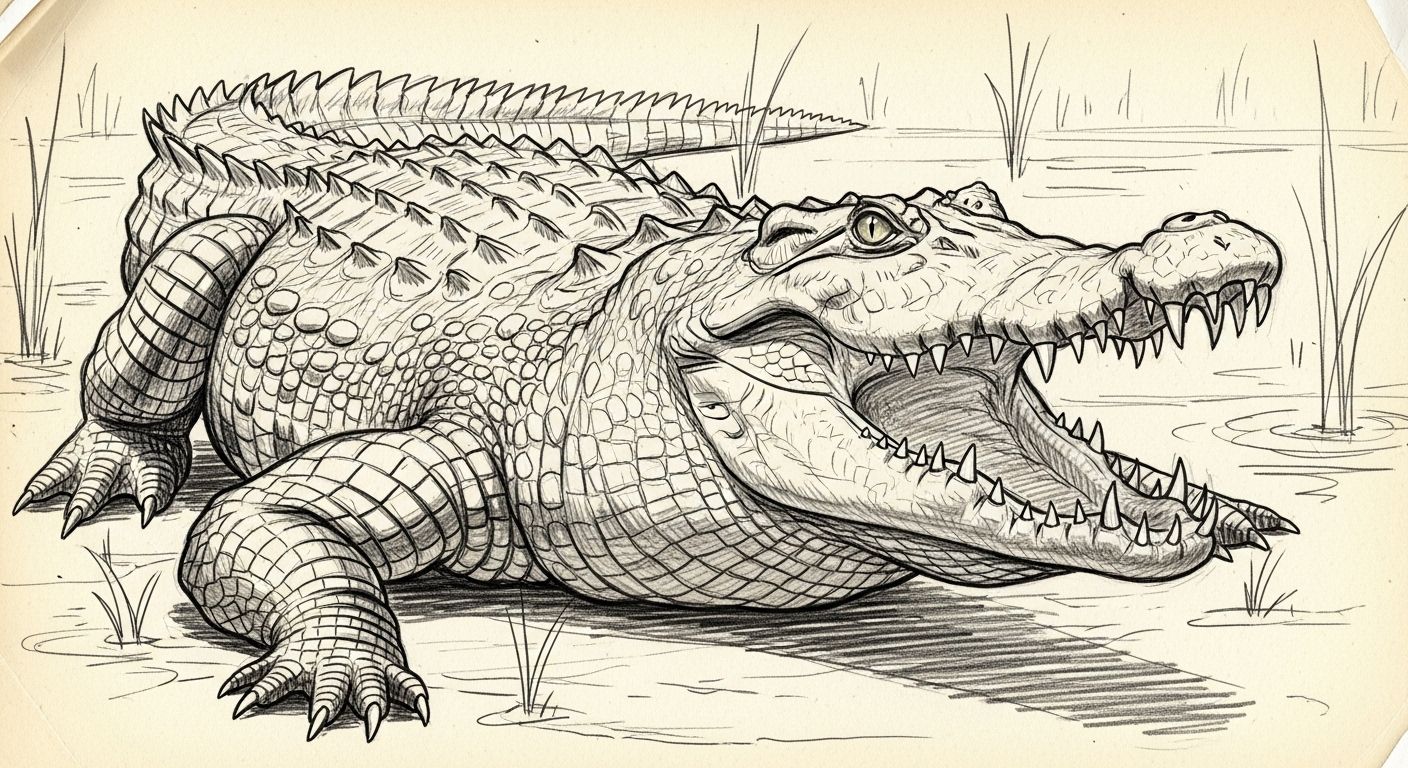
Let’s be real—most folks think a crocodile sketch starts and ends with a snout full of daggers. But nah, homie. The magic’s in the details: the armored osteoderms along its back, the subtle curve of its tail that whips like a midnight thunderclap, and those eerie, lidless eyes that look like they’ve memorized your secrets. A legit crocodile sketch balances menace with majesty. You gotta nail the spine’s undulation, the way its belly drags like it owns the mud. Miss that, and you’re just drawing a scaly log with dental issues.
Tools of the trade: what you really need for a pro-level crocodile sketch
Don’t let anyone tell you you need a $200 pencil set to make a fire crocodile sketch. You can lay down a beastly draft with just a $2 mechanical pencil and some printer paper—though, sure, a 4B charcoal stick and toned tan paper’ll make your crocodile sketch pop like a bass drop at a block party. What matters most? Your eye for contrast. Crocs live in shadows and shallows, so your sketch should too. Layer graphite like you’re seasoning brisket: low and slow, baby. A kneaded eraser? Non-negotiable. It’s your secret weapon for pulling light outta darkness.
Step-by-step breakdown: turning chaos into a clean crocodile sketch
Start loose. Real loose. Scribble a C-shape for the body, a longer S for the tail, and a triangle-with-teeth for the mug. No pressure—your first pass is just you saying “hey” to the critter. Then, refine. Map the jawline, notch in those serrated chompers, and rough out the scale clusters like cracked desert earth. Build texture with crosshatching that whispers rather than shouts. By the time you shade the underbelly with soft, feathery strokes, your crocodile sketch won’t just look alive—it’ll feel like it’s watching you back from the page. That’s the vibe.
Why artists love the crocodile sketch: symbolism, soul, and Southern grit
Down in the bayous and backwaters, the gator (and its saltwater cousin, the croc) ain’t just wildlife—it’s a symbol of resilience, patience, and low-key dominance. A crocodile sketch channels that energy. It’s the animal that survived the asteroid, outlasted dinosaurs, and still naps in the same spot for a week. Drawing one feels like paying homage to old-school toughness with a dash of Delta blues. There’s poetry in its stillness, power in its pause. And let’s be honest—when your crocodile sketch nails that quiet intensity, it’s worth more than a whole gallery of photorealistic squirrels.
Common mistakes that turn your crocodile sketch into a confused lizard
Over-sharpening every scale? Big oof. A crocodile sketch thrives on suggestion, not surgical precision. And don’t cram teeth like it’s a shark convention—croc chompers are staggered, uneven, with some hidden like poker chips up a sleeve. Also, watch the proportions. That tail? It’s half the body length, not an afterthought. And the legs—tiny but mighty—should look like they could anchor a tugboat. Mess those up, and your crocodile sketch just looks like it lost a fight with a raccoon.
From doodle to masterpiece: how daily practice transforms your crocodile sketch
We’ve all been there—first crocodile sketch looks like a crumpled receipt with teeth. But here’s the tea: consistency beats talent every time. Sketch one croc a day for a month, and by week three, you’ll start seeing the musculature beneath the scales, the rhythm in the ridges. Use reference photos (not cartoons!), and don’t skip gesture drawings—yes, even for reptiles. That fluid S-curve in its spine? That’s your golden thread. Keep chasing it, and your crocodile sketch game’ll level up faster than you can say “swamp royalty.”
Crocodile sketch vs. alligator sketch: subtle differences that matter
Hold up—before you slap “crocodile sketch” on every toothy reptile you draw, know this: crocs and gators ain’t twins. A true crocodile sketch shows a V-shaped snout with both upper and lower teeth visible when the mouth’s shut. Alligators? U-shaped mug, lower teeth tucked away like secrets. Plus, crocs hang in saltwater, gators stick to freshwater. Get the habitat right in your background shading, and your sketch tells a truer tale. Nail that distinction, and you’re not just drawing—you’re documenting.
Fun facts that’ll spice up your next crocodile sketch session
Did you know crocs can’t stick out their tongues? Or that they’ve got pressure sensors on every scale that detect a single raindrop? Toss that into your next crocodile sketch mindset, and suddenly you’re not just rendering form—you’re honoring function. They also sleep with one eye open (literally), and their hearts can shunt blood to stay submerged for over an hour. Sketch that quiet intensity, that ancient alertness, and your crocodile sketch becomes a portal—not just a picture.
- Crocodiles have been around since the Mesozoic Era (200+ million years)
- They replace teeth up to 50 times in a lifetime
- Top speed on land: 11 mph—faster than your average dog walk
Where to share and grow your crocodile sketch skills in the U.S. art scene
If you’re proud of your crocodile sketch, don’t let it collect dust in a binder. Post it on sketch communities, enter wildlife drawing challenges, or even pitch it to indie zines that celebrate raw, untamed art. And hey—start at home. We’ve got a whole corner for creatives like you right over at Randall Enos, where the focus stays sharp and the vibes stay human. Dive deeper into technique in our dedicated Sketch section, or grab quick inspiration from our guide on Easy Pen Sketches Fun Daily Practice. Your next crocodile sketch might just be the one that catches a curator’s eye.
Frequently Asked Questions
What is the easiest animal to draw?
While opinions vary, many beginners find cats, dogs, or fish simpler due to softer shapes—but if you’re chasing character, a crocodile sketch offers bold lines and clear geometry that actually makes it surprisingly beginner-friendly once you grasp its form. Its angular snout and segmented tail create natural guides for proportion.
Can crocodiles feel pain?
Yes, scientific research confirms crocodiles possess complex nervous systems and nociceptors, meaning they absolutely experience pain. This understanding adds ethical depth to any crocodile sketch—it’s not just a predator icon, but a sentient being deserving of respect in both life and art.
How to draw a gorilla sketch?
Start with basic shapes—oval for the head, broad rectangles for the chest and shoulders—then layer muscle and fur texture. Unlike the hard edges of a crocodile sketch, a gorilla sketch thrives on soft, directional strokes to mimic dense hair and expressive eyes. Focus on posture to convey emotion.
How to draw a Spider-Man pencil sketch?
Begin with a dynamic pose using stick figures and circles, then build the suit’s web pattern with light guidelines. Unlike the organic realism of a crocodile sketch, Spider-Man demands clean lines, exaggerated anatomy, and bold contrast—especially around the mask’s large, expressive lenses. Keep it energetic!
References
- https://www.nationalgeographic.com/animals/reptiles/facts/crocodiles
- https://www.smithsonianmag.com/science-nature/crocodile-pain-perception-study-2021
- https://www.artistsnetwork.com/techniques/drawing-anatomy-wildlife
- https://www.britannica.com/animal/crocodile