Fusion 360 Copy Sketch Quick Edit Guide
- 1.
What Exactly Is a fusion 360 copy sketch and Why Should You Care?
- 2.
Is It Magic or Just Smart Workflow? The Truth About fusion 360 copy sketch
- 3.
Step-by-Step: How to Execute a Flawless fusion 360 copy sketch
- 4.
Common Pitfalls When Using fusion 360 copy sketch (And How to Dodge ’Em)
- 5.
When to Use fusion 360 copy sketch vs. Other Tools Like Mirror or Pattern
- 6.
Pro Tips for Power Users: Advanced fusion 360 copy sketch Hacks
- 7.
How fusion 360 copy sketch Fits Into Real-World Engineering Workflows
- 8.
Comparing fusion 360 copy sketch Across Different Fusion 360 Versions
- 9.
Keyboard Shortcuts and Hidden Menus for Faster fusion 360 copy sketch
- 10.
How to Teach Others the Art of fusion 360 copy sketch Without Losing Your Mind
Table of Contents
fusion 360 copy sketch
What Exactly Is a fusion 360 copy sketch and Why Should You Care?
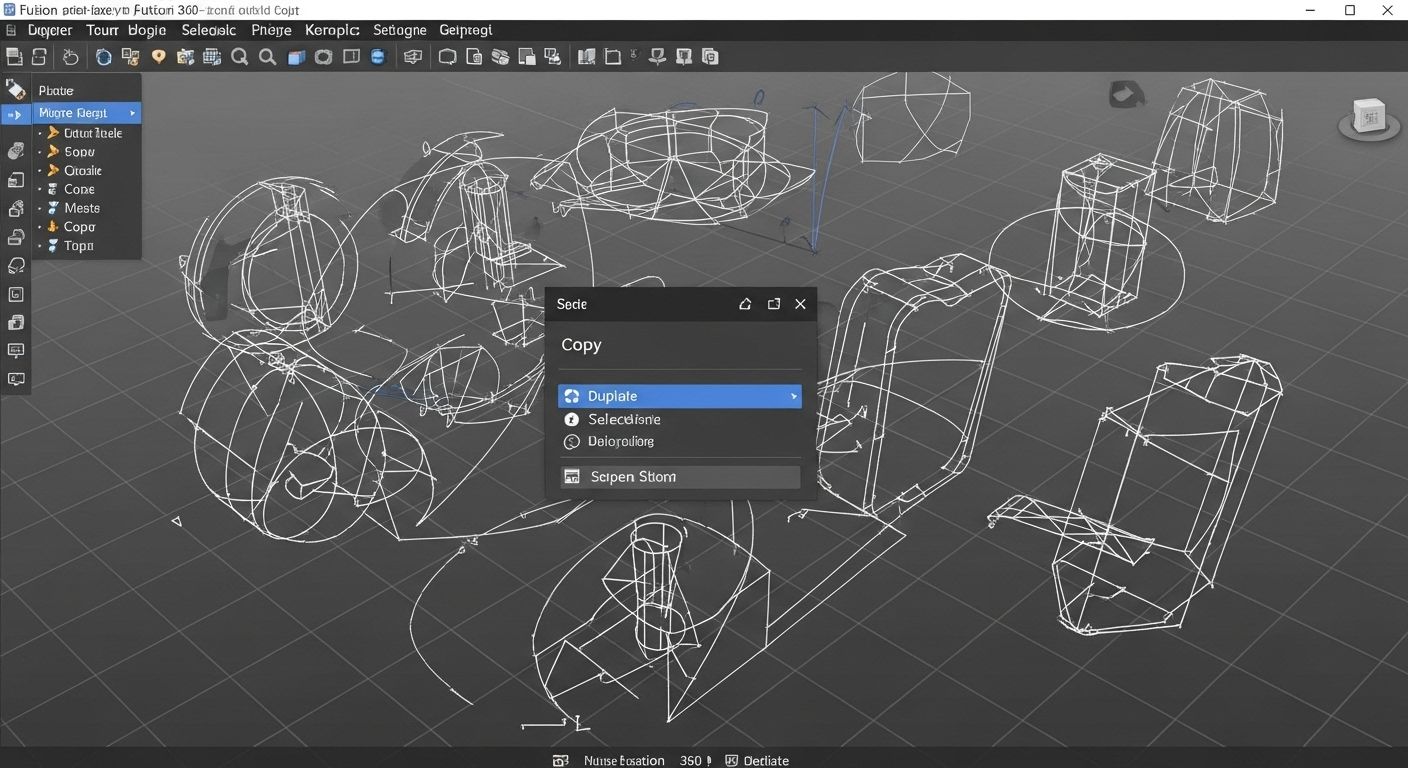
Ever tried to redraw your grandma’s favorite rocking chair from scratch—only to realize you already nailed it two projects ago? Yeah, that’s where fusion 360 copy sketch swoops in like your design superhero, cape flappin’ in the digital wind. Instead of reinventing the wheel (or the spline), Fusion 360 lets you lift, shift, and paste entire sketches like you’re shuffling a deck of precision-engineered cards. A fusion 360 copy sketch isn’t just a time-saver—it’s a sanity preserver for anyone knee-deep in CAD chaos. Whether you're prototyping a backyard drone or sketching out a custom bike frame, reusing geometry means less grunt work and more “heck yeah!” moments.
Is It Magic or Just Smart Workflow? The Truth About fusion 360 copy sketch
Let’s cut the fluff: copying sketches in Fusion 360 ain’t sorcery—it’s just smart engineering hygiene. Think of your sketch like a reusable cookie cutter. Once you’ve got that perfect gear tooth or ergonomic handle profile, why carve it again? With fusion 360 copy sketch, you preserve your hard-earned geometry and drop it wherever your design demands. The beauty? It respects constraints and dimensions (unless you tell it not to), so your fusion 360 copy sketch stays true to form—no wonky offsets or accidental flips. You’re not just copying lines; you’re cloning intent.
Step-by-Step: How to Execute a Flawless fusion 360 copy sketch
Alright, grab your digital hardhat—we’re diving in. First, open the sketch you adore (you know the one). Select all the entities you wanna clone—hold Ctrl (or Cmd if you’re Apple-fied) and click like you mean it. Hit Ctrl+C to copy. Now, switch to your target sketch plane or face—could be on the same body, a new component, or even a parallel universe (okay, maybe not that far). Press Ctrl+V, and *bam*—your fusion 360 copy sketch materializes, ready to roll. Pro tip: if things look rotated or flipped, check the paste orientation dialog. Fusion 360’s got your back, but only if you peek at the options.
Common Pitfalls When Using fusion 360 copy sketch (And How to Dodge ’Em)
Here’s the tea: a fusion 360 copy sketch can ghost you if you’re not careful. Ever pasted a sketch only to find it floating in space like a confused astronaut? That’s usually because you pasted onto a non-planar surface or forgot to activate the right sketch. Also, watch out for external references—if your original sketch was tied to model edges, the copy might throw a tantrum when those edges vanish. And don’t even get us started on units. Mixing inches and millimeters mid-fusion 360 copy sketch? That’s a one-way ticket to Dimensionville, population: you and your regret. Always verify units, constraints, and sketch placement before hitting “Finish Sketch.”
When to Use fusion 360 copy sketch vs. Other Tools Like Mirror or Pattern
So you’re eyeing that symmetrical bracket and wondering: should I fusion 360 copy sketch, mirror, or pattern? Great question, cowboy. If you’re repeating geometry *within the same sketch*, patterns or mirroring are slicker—they’re parametric, so changes ripple through. But if you’re hopping between sketches, components, or design iterations? That’s fusion 360 copy sketch territory. Think of it like this: mirroring’s your tight-knit twin; copying’s your long-lost cousin who shows up with pizza and great ideas. Use fusion 360 copy sketch when you need independence—when you want that gear profile over *there*, unchanged by what happens *here*. Flexibility’s the name of the game.
Pro Tips for Power Users: Advanced fusion 360 copy sketch Hacks
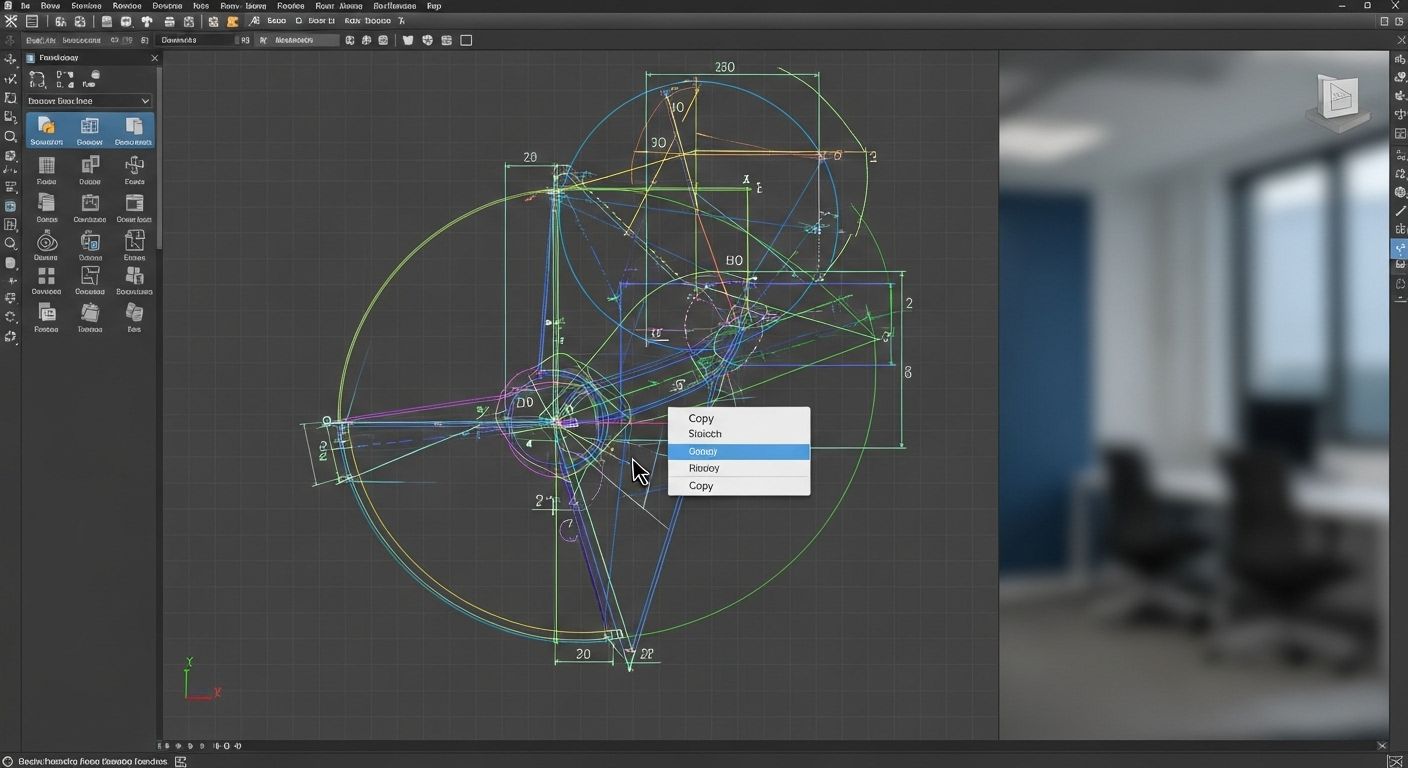
Ready to level up? Here’s how the CAD wizards roll. First, combine fusion 360 copy sketch with construction geometry—paste your sketch onto a construction plane offset by 0.5 inches, then extrude like a boss. Second, tweak dimensions *after* pasting to create variants without cluttering your browser timeline. Third, use the “Break Link” option if you want a totally independent copy—no strings attached. Oh, and if you’re working on a team? Paste into a new component to avoid accidental edits to the original. These aren’t just tricks—they’re your secret sauce for clean, scalable designs.
How fusion 360 copy sketch Fits Into Real-World Engineering Workflows
Let’s get real: in the wild, engineers don’t just sketch for fun (well, mostly). Say you’re designing a modular drone frame—each arm needs identical mounting tabs. Instead of redrawing, you nail it once, then use fusion 360 copy sketch across four sketch planes. Or maybe you’re iterating on a medical device housing and need to test three vent patterns. Copy, paste, tweak—boom, three concepts in ten minutes. In automotive prototyping, folks reuse gasket profiles across engine variants using this exact move. The fusion 360 copy sketch isn’t just a button—it’s a workflow accelerator that turns “meh” into “manufacturable” before lunch.
Comparing fusion 360 copy sketch Across Different Fusion 360 Versions
Good news: Autodesk’s kept the fusion 360 copy sketch core consistent since like, forever. Whether you’re on the free Personal Use plan or rocking a full Commercial license, the copy-paste magic works the same. That said, newer versions (post-2023) handle sketch orientation a bit smarter—fewer “why’s it sideways?!” moments. Also, cloud sync now preserves sketch history better, so your fusion 360 copy sketch actions play nice with version control. If you’re still on a 2020 build, maybe it’s time for an update—your future self (and your sketches) will thank you.
Keyboard Shortcuts and Hidden Menus for Faster fusion 360 copy sketch
Forget clicking through dropdowns like it’s 2005. Speed demons use Ctrl+C / Ctrl+V—but did you know holding Alt while pasting toggles alignment options? Or that right-clicking in the sketch canvas gives you “Paste New” for a fresh start? Even slicker: assign “Copy Sketch” to a custom toolbar if you do it daily. And hey—if you’re on a Mac, swap Ctrl for Cmd, but keep the swagger. Mastering these micro-movements turns your fusion 360 copy sketch sessions from plodding to lightning-fast. Efficiency isn’t just cool—it’s billable.
How to Teach Others the Art of fusion 360 copy sketch Without Losing Your Mind
Teaching CAD newbies? Start simple: “Imagine your sketch is a tattoo stencil—you can stamp it anywhere.” Avoid jargon like “parametric associativity” until they’ve survived their first extrusion fail. Use live demos: copy a simple rectangle from Sketch1 to Sketch2, then stretch it to show independence. And for Pete’s sake, emphasize *where* to paste—so many students paste into thin air and wonder why nothing shows up. Share resources like our guide on Comics Drawing Easy Simple Tips Shared, because visual literacy transfers surprisingly well to CAD. For the full journey, send ’em to the Sketch section or just point to the homepage: Randall Enos. Keep it light, keep it visual, and never mock the “accidental 3D sketch” phase—we’ve all been there.
Frequently Asked Questions
How to copy from one sketch to another in Fusion 360?
To perform a fusion 360 copy sketch from one sketch to another, open your source sketch, select all entities (Ctrl+A), copy (Ctrl+C), then open or create your target sketch and paste (Ctrl+V). The geometry will appear with the same dimensions, ready for editing or extrusion.
How to duplicate a drawing in Sketches?
Duplicating a drawing in Fusion 360 sketches is done via the fusion 360 copy sketch method: copy the sketch entities, then paste them into a new sketch or the same one. This creates an independent copy you can modify freely—perfect for iterating on design details without starting over.
How to repeat a sketch in Fusion?
To repeat a sketch in Fusion 360, use the fusion 360 copy sketch technique across multiple planes or faces. Alternatively, for symmetrical repeats within one sketch, use the Pattern or Mirror tools—but for cross-sketch reuse, copying and pasting remains the gold standard for flexibility.
How to create a sketch on Fusion 360?
Creating a sketch in Fusion 360 is your first step before any fusion 360 copy sketch action. Click “Create Sketch,” choose a plane or face, then draw your geometry. Once saved, this sketch becomes a reusable asset—ideal for future copying, extruding, or sharing across your design ecosystem.
References
- https://www.autodesk.com/products/fusion-360/blog
- https://forums.autodesk.com/t5/fusion-360/
- https://knowledge.autodesk.com/support/fusion-360/learn-explore